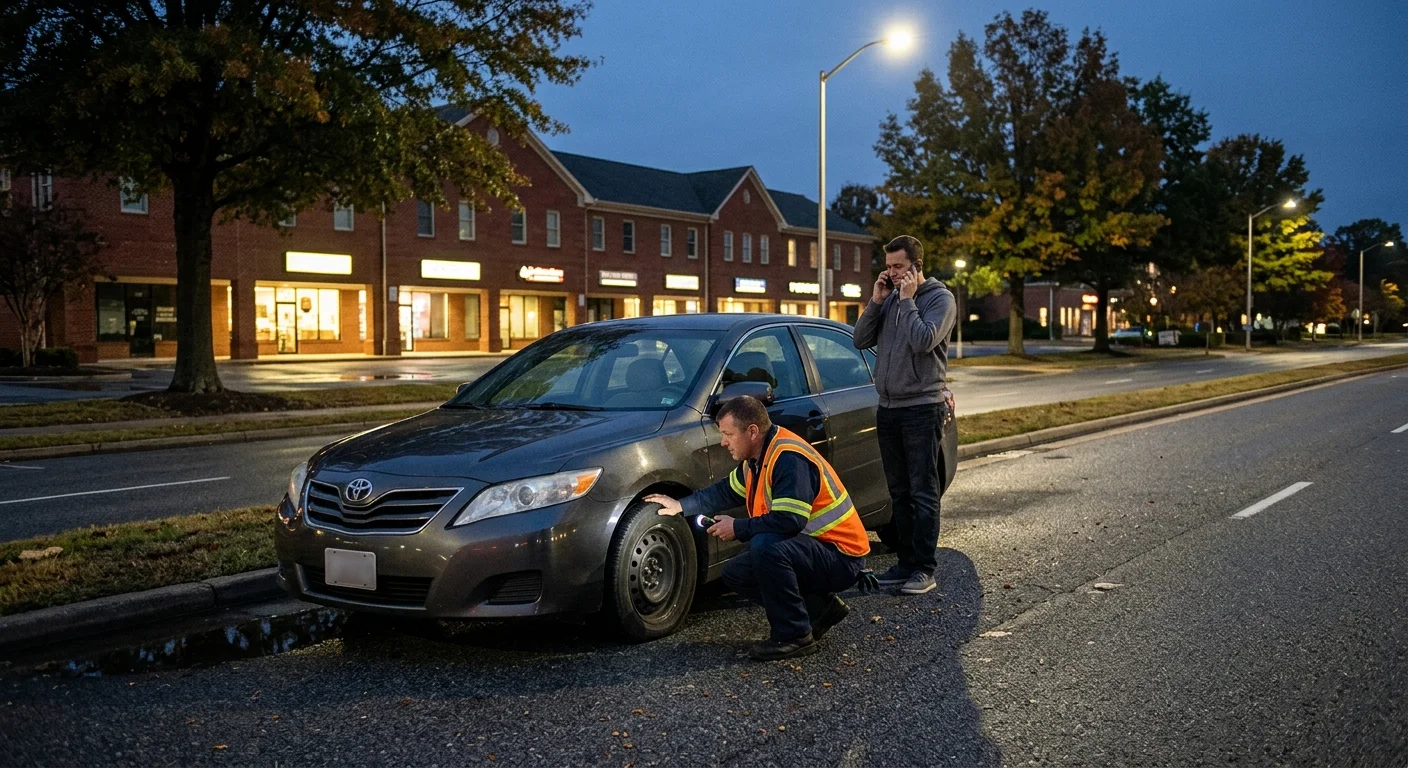
For 24 hour emergency towing Midlothian drivers can use after dark, first share your exact location, vehicle condition, and destination. Our recorded line is available around the clock and plays a recording notice before your message. Quick Tow Richmond then matches you with an independent operator, who performs the work and bills you directly.
Start with your location for 24 hour emergency towing Midlothian
A precise location gives the operator something useful to work from. A Midlothian mailing address alone may not describe where your car stopped.
On Midlothian Turnpike, provide your direction of travel and nearest cross street. Mention the entrance if you’re inside a shopping center or office property. In a neighborhood, give the full street address and nearby intersection. If you’re unsure whether you crossed into another jurisdiction, share the address instead of guessing.
Tell the referral line where the car sits right now. It could be blocking a travel lane, resting on a shoulder, or parked away from traffic. Mention a collision, smoke, leaking fluid, or immediate danger. Contact emergency services first when someone’s safety is at risk.
Your phone’s map pin can help confirm the location. Read the displayed address aloud, then describe what you see nearby. Don’t rely on a business name without also giving its street or entrance.
Your first message should say whether the hazard flashers work and whether the car remains exposed to traffic.
For current traffic and incident information, check 511 Virginia. That can help clarify whether a closure or active incident affects your location.
Decide whether roadside help may be enough
Not every disabled car needs to be transported. A dead battery, flat tire, or empty fuel tank may call for roadside assistance instead. The right choice depends on what happened and whether the car can be driven afterward.
Start with what you observed. Say whether the engine stopped while moving or wouldn’t start after parking. Describe clicking sounds, dashboard warnings, smoke, fluid, or visible damage. Avoid guessing at a mechanical diagnosis. Clear symptoms are more useful than an uncertain label.
Tell the operator what you already tried. That might include a jump attempt or checking for an obviously flat tire. Also mention whether the vehicle starts but won’t move. The operator can use those details to assess whether roadside help or towing fits the call.
VDOT’s Safety Service Patrol provides free help on I-95, I-64, and I-295 in the Richmond area. Its services include tire changes, fuel delivery, jump starts, radiator water, and help arranging a tow. SSP isn’t a towing company and doesn’t perform mechanical repairs.
That patrol matters if your Midlothian trip began on an interstate route. Our guide for a breakdown on I-95 near Richmond explains what information to gather there. For a disabled vehicle on Midlothian Turnpike or a local street, describe the situation first. The independent operator can then assess the requested service.
Describe the vehicle and what stopped it
The operator needs more than the vehicle’s color. Give the year, make, model, and body type if you know them. Mention whether it’s a sedan, pickup, motorcycle, van, or another vehicle type.
Next, describe its current condition. Say whether every wheel is present and appears able to roll. Note visible collision damage, a wheel against a curb, or a vehicle resting in mud. If the steering won’t turn or the parking brake won’t release, include that detail.
Tell the operator whether you have the keys. Mention passengers, attached trailers, or cargo that changes the vehicle’s condition. Don’t leave out modifications or unusually low clearance. These details help the independent operator assess the call before accepting it.
A breakdown and a recovery aren’t always the same job. A car parked normally with a mechanical problem presents different conditions from one that left the roadway. Be direct about what happened, even if you aren’t sure why it happened.
Photos may also help explain visible damage or the car’s position. Send them only through a method the operator provides. A wide view can show the position, while a closer view can show a damaged wheel or obstruction.
Our emergency towing service page explains how the referral process works. Quick Tow Richmond doesn’t own tow trucks or perform the tow. We collect the call details and seek to connect you with an independent operator. That operator decides whether to accept the work, discusses the service, and handles billing.
Choose a destination before dispatch
Pick a destination before the operator begins the trip. A complete address helps the operator assess distance and provide a fuller charge.
Your destination may be a repair shop, dealership, home, or another lawful parking location. If you choose a Midlothian or Chesterfield repair facility, confirm that it can receive the vehicle after hours. Ask where the car should be placed and whether a gate or designated entrance affects access.
Don’t assume a closed shop will accept an unattended vehicle. Confirm its instructions directly. A key drop doesn’t always mean the property accepts vehicles at every hour.
Give the operator the destination name and full street address. If the property has several entrances, explain which one should be used. Share any instructions the destination gave you without changing their wording.
If you haven’t selected a repair facility, say so during the referral call. You can discuss possible destinations with the independent operator, but confirm the final address before authorizing the service. Changing the destination later can change the distance involved.
Police-directed or collision-related situations may involve instructions from law enforcement. Follow those instructions and tell the operator what you were given. Don’t assume an ordinary breakdown follows the same process as an impound or private-property tow.
Choosing the destination early also helps prevent confusion between Midlothian, Chesterfield, and the City of Richmond. Those place names can overlap in everyday conversation, but the exact pickup and delivery addresses keep the request clear.
Confirm the full charge with the operator
No single verified after-hours towing rate for Midlothian could be confirmed from the approved county sources. The independent operator sets the charge, contracts with you, and bills you directly. Quick Tow Richmond doesn’t set that operator’s total.
Before agreeing, ask for the full expected charge using the exact pickup and destination addresses. Ask whether the quoted total includes the initial service, mileage, after-hours work, and any recovery conditions you described. If storage could become involved, ask where the vehicle would go and what charges could apply.
A quoted emergency tow isn’t the same thing as a legal ceiling for a nonconsensual private-property tow. Virginia’s towing laws regulate certain fees, but those ceilings aren’t a Quick Tow Richmond price or a guaranteed emergency-towing total.
Our guide to tow costs in Richmond explains that distinction. Midlothian is in Chesterfield County, so Richmond city fee figures shouldn’t be presented as Chesterfield prices. No verified Chesterfield dollar figure appears in the approved research.
Ask the operator to repeat the total and payment terms before you authorize the job. Confirm what could change that amount. If the destination or vehicle condition changes, request an updated total before proceeding.
Keep written confirmation when the operator provides it. Virginia towing operators must maintain records that include itemized fees, and vehicle owners can request an itemized bill. Check each line against the service you authorized and raise any difference directly with the operator.
When to call us
Call when your car can’t be driven and the situation needs a licensed towing professional. We’ll take your recorded message and seek to match you with an independent operator who contracts with you directly. Call us at (804) 701-6752.