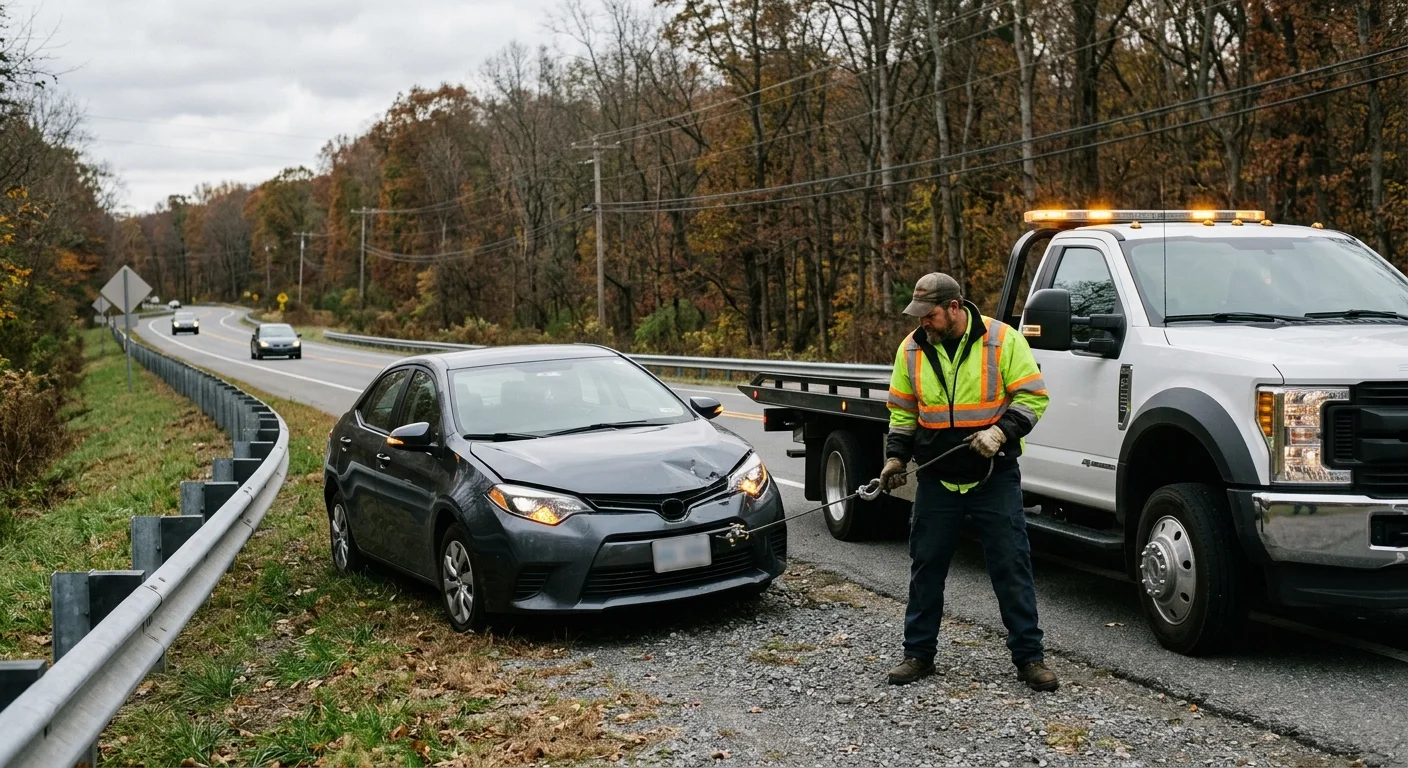
A Richmond crash can leave you facing a tow bill before insurance responds. The short answer to who pays for tow after accident is that the vehicle owner generally pays the removal and storage costs, then seeks reimbursement if coverage applies.
The tow bill and any insurance repayment are separate transactions. Don’t assume another driver or insurer will pay the yard directly.
Who pays for tow after accident: the first bill
Virginia requires an owner reclaiming a vehicle to pay its removal and storage costs. That answers who must deal with the yard. It doesn’t decide which insurer may eventually reimburse that expense.
Start by asking who authorized the tow. It may have been you, another person with the vehicle, or an officer managing the crash scene. Next, identify the operator, the destination, and the charges due for release.
Ask the towing operator whether it needs payment from you. Then ask your insurer whether it can pay the operator or needs a receipt from you. Get both answers before assuming the bill will move between them automatically.
Quick Tow Richmond is a referral service. We connect drivers with independent towing operators. The operator contracts with the driver, performs the work, and bills the driver directly. We don’t own the truck, hold the vehicle, or set the operator’s total price.
Keep that distinction clear when discussing payment. Your agreement with the operator creates one transaction. Your insurance claim creates another. Approval of one doesn’t automatically settle the other.
The three possible payment paths
Your own policy is the first place to check. Towing coverage is an optional policy feature in Virginia. It isn’t part of a universal state requirement. Your declarations page, policy documents, or insurer can confirm whether you bought it.
Ask these specific questions:
- Does my policy cover towing after a collision?
- Does it cover the full trip or impose a policy limit?
- Must I use a selected towing company?
- Does the insurer pay directly or reimburse me?
- What documents must I submit?
The second path involves the other driver’s carrier. You can ask that carrier whether it will consider the tow expense with your property-damage claim. No universal Virginia rule confirming direct payment by that carrier could be verified. Don’t treat a pending claim as payment approval.
The third path is paying the operator and requesting reimbursement later. Save the itemized bill, payment receipt, tow authorization, and every claim message. Ask the insurer how it wants those records submitted.
Our guide to insurance coverage for towing in Virginia explains why the answer depends on your policy. It also helps separate optional towing coverage from other parts of an auto claim.
How police-directed crash tows work in Richmond
Police may direct a tow when a Richmond crash leaves a vehicle in the roadway or otherwise requires removal. Vehicle accidents appear on the city’s published list of tow triggers.
The City of Richmond doesn’t operate a municipal impound yard. Its exclusive towing contractor for city-directed tows is Seibert’s Towing. That means a police-directed tow in the city follows a different path from a tow you arrange yourself.
Use the City of Richmond towed-vehicle listing if you don’t know where the car went. The listing includes identifying details, the tow time, and the lot address. Entries remain available for 14 days. Our guide to finding a towed car in Richmond walks through that lookup process.
Jurisdiction matters across the metro. A crash near the I-95 and I-64 overlap may fall within Richmond. A wreck farther north could be in Henrico. A Southside collision may cross into Chesterfield.
No public online lookup was found during the Henrico research. Contact Henrico Police through its verified non-emergency channel. Chesterfield uses approved towing companies for county-directed tows, with the assigned operator selected through its rotation.
Before leaving the scene, confirm which jurisdiction handled the crash. That detail tells you where to start looking.
Why storage needs attention before the claim is settled
The tow itself may be only part of the bill. A yard can also charge for storing the vehicle while it remains there. The specific accident-tow storage rate and billing period couldn’t be confirmed from the approved Richmond sources.
Call the yard and ask for its current fee schedule. Confirm when storage begins, how each billing period is calculated, and what payment methods it accepts. Ask whether any hold prevents release or relocation.
Don’t assume an open insurance claim pauses storage charges. Instead, ask the yard what is currently accruing. Then ask the adjuster what must happen before the vehicle moves.
If the insurer needs an inspection, request its next step in writing. Ask whether photographs are enough or whether the vehicle must remain available at the yard. If no hold applies, discuss moving the car to a repair shop or another approved location.
Get the total due through the planned pickup time. That total should identify towing, storage, and any separate listed charge. Keep the itemized receipt after payment.
A delay can make the payment dispute harder to manage. It can also leave the owner, operator, and insurer working from different totals. One written update shared with everyone can prevent that confusion.
What to collect at the crash scene
Good records connect the tow expense to the crash. Start with photographs of the vehicle, visible damage, and its position before removal, when taking them is safe.
Collect these details:
- The towing company’s name
- The yard’s name and address
- The tow destination
- The tow slip or authorization
- The officer’s agency
- The police report or incident number, if one was issued
- The operator’s itemized bill
- Your payment receipt
- Your insurance claim number
Photograph the tow slip before handing over any original paperwork. Save screenshots of messages with the insurer and yard. Write down the date and purpose of each call.
Virginia towing operators must maintain towing records that include itemized fees. Richmond also requires an itemized receipt for private-property tows. An accident tow follows its own circumstances, so ask the operator for an itemized document rather than assuming another fee rule applies.
Check that the vehicle description and destination are correct. Ask the adjuster which documents connect the tow to the claim. If the carrier rejects something, request a clear explanation of what is missing.
These records won’t guarantee reimbursement. They give the insurer a traceable expense tied to the correct vehicle and incident.
When to request a tow directly to your shop
Ask about the destination while the crash scene is still being managed. If the vehicle is available for release and the scene allows it, ask whether the operator can take it directly to your chosen repair shop.
Give the full destination before agreeing. Ask for the complete towing total, including any mileage component. Confirm that the shop will accept the vehicle and can receive it at the expected time.
A police-directed tow may already be headed through Richmond’s towing program. An official hold can also affect access or relocation. Don’t describe a preferred destination as guaranteed. Ask the officer and operator what choices are available at that scene.
Once the vehicle can be released, Virginia allows the owner or another towing business to request access for inspection or relocation, subject to a written request and proper payment. Ask the yard what proof and written request it needs.
For a damaged vehicle that has left the roadway, review our accident recovery and winch-out service. If the vehicle is disabled but the scene doesn’t require recovery work, emergency towing may be the closer match.
Frequently asked questions
Does the at-fault driver pay the tow yard directly?
Don’t assume so. No universal Virginia rule requiring direct payment from the other driver or carrier could be confirmed in the approved sources.
Ask the carrier whether it will accept the tow expense as part of the claim. Confirm whether it pays the operator or reimburses you after payment. Until that answer is documented, treat the yard’s bill and the insurance claim separately.
What happens if the car is totaled?
A total-loss decision doesn’t erase the initial tow or storage transaction. Ask the insurer where the vehicle should remain while it evaluates the damage.
No universal Virginia insurance rule for paying an accident tow on a totaled vehicle could be confirmed here. The carrier and your policy determine the claim process. Keep the tow slip, itemized bill, storage records, and payment receipt.
Don’t authorize disposal or transfer paperwork until you understand what the insurer needs. Ask who will arrange the vehicle’s next move and who will pay that operator.
What if I don’t have collision coverage?
Check whether you bought separate towing coverage. Virginia treats towing as an optional policy feature, not mandatory coverage.
If your policy doesn’t apply, ask the other driver’s carrier whether it will consider the expense. Get its response in writing. If the yard requires payment before release, you may need to pay first and continue seeking reimbursement afterward.
When to call us
A crash needs a licensed towing pro when the vehicle can’t be safely driven or requires recovery from off the roadway. Quick Tow Richmond can match you with an independent operator through our recorded line, which is available around the clock. Call us at (804) 701-6752.