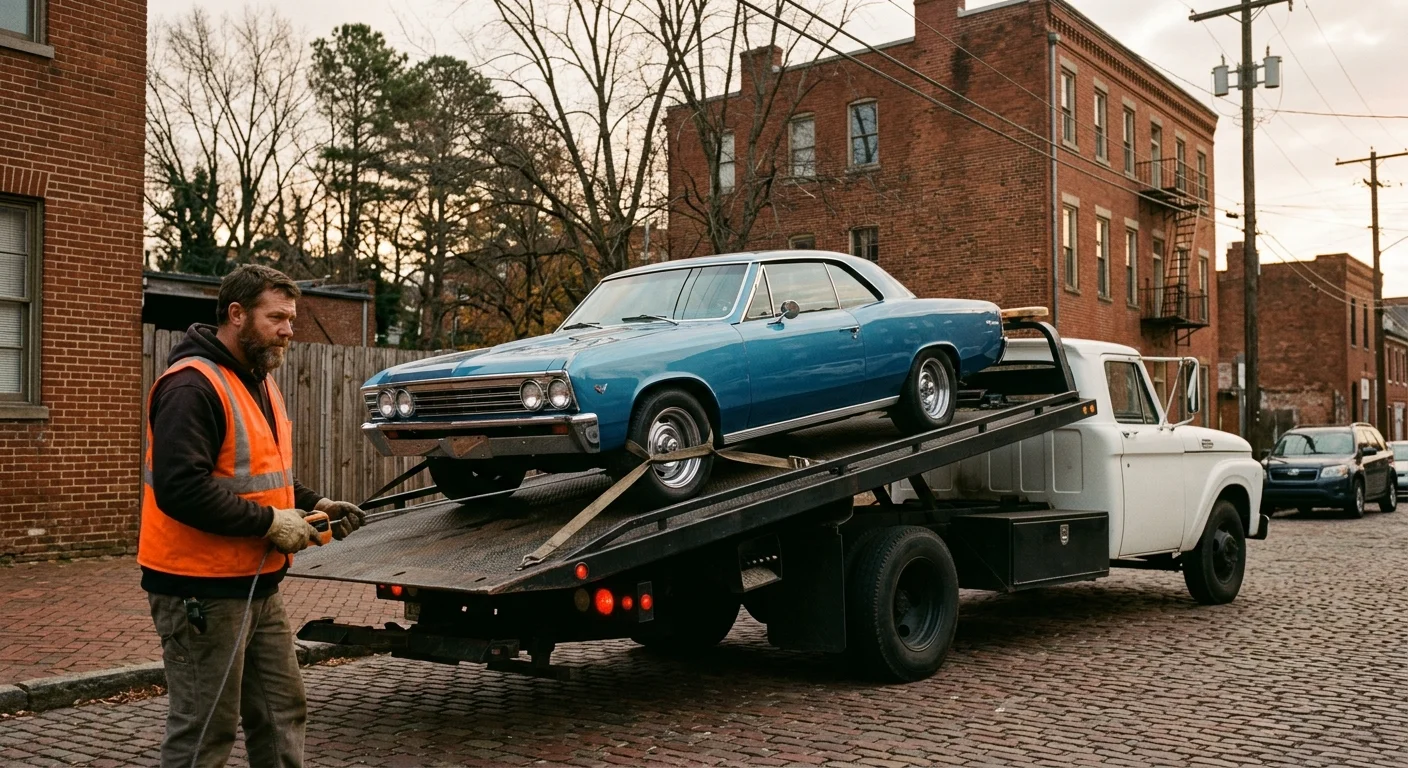
A collector car needs more planning than an ordinary roadside tow. For classic car towing in Richmond, request a flatbed and describe the car’s clearance, condition, modifications, and location before dispatch. Confirm the loading and securement plan directly with the independent operator.
That conversation matters on Richmond’s brick streets, steep grades, and busy interstate corridors. Small access details can change how the operator approaches the vehicle.
Flatbeds for classic car towing in Richmond, and why a wheel lift is the wrong call
A wheel lift supports one end while the other remains on the road. That can be the wrong default for an older, restored, or modified vehicle. Unknown driveline details, delicate trim, and unusual bodywork deserve a closer look before anything moves.
Ask for a flatbed towing operator who can load the entire vehicle onto the deck. Tell the operator that it’s a classic when you first leave your message. Don’t wait until the truck reaches the pickup point.
The operator still needs the vehicle’s actual condition. Explain whether it starts, rolls, steers, and stops. Mention locked wheels, weak tires, loose panels, or visible leaks. Tell them about lowered suspension, side pipes, spoilers, or other changes that could affect loading. If you don’t know something, say that plainly.
A careful operator should inspect the car and surrounding space before loading. Ask how the vehicle will reach the deck and where it will be secured. If a wheel lift is proposed, ask why that method suits this specific vehicle.
Quick Tow Richmond doesn’t own the truck or perform the tow. The line takes your call and we match drivers with independent licensed tow operators. The operator contracts with you, handles the vehicle, and bills you directly. Our exotic and classic vehicle towing page explains that referral process.
Low clearance and what the loading angle does
Loading angle matters when a classic sits close to the pavement. The front valance, exhaust, running boards, and rear bodywork may approach the deck before the tires do. Lowered suspension or a long overhang can make that gap even tighter.
Describe the lowest areas before dispatch. Don’t rely only on the vehicle’s make and model. Restoration work and later modifications can change how the car sits. A vehicle that looks stock from the curb may need a different approach.
At pickup, ask the operator to pause before winching. Walk around the car together. Point out vulnerable trim, existing marks, loose pieces, and anything hanging below the body. Check the path from the parking spot to the deck. Curbs, drainage dips, brick surfaces, and steep driveways can affect positioning.
Church Hill and Manchester add another concern. Brick streets and steep grades can limit where a flatbed sits level enough for loading. In Shockoe Bottom, cobblestone surfaces can make precise positioning more involved. Give the operator the exact pickup setting, not just the neighborhood name.
A careful load should look controlled from the first movement. The operator can adjust the truck’s position or loading approach after seeing the car. Your role is to disclose what’s unusual and stop the process if bodywork appears too close to the deck.
Soft straps, wheel nets, and where they attach
Ask how the operator plans to restrain the car before loading begins. Soft straps and wheel nets can hold around the tires without treating painted or restored parts as attachment points. The exact setup still depends on the car, the truck, and the operator’s equipment.
Don’t direct hooks toward an axle, suspension arm, or frame point based on memory alone. Classics often have repairs, replacements, or modifications that aren’t visible from above. A safe-looking point may not match the vehicle’s current construction. Let the operator inspect underneath and explain the proposed attachment points.
Walk around the vehicle after it reaches the deck. Look at each tire and the clearance around straps. Check that a strap isn’t resting against a painted panel, trim piece, brake line, or exhaust component. If you see contact, speak up before the truck leaves.
Loose items need attention too. Remove anything sitting on the seats, parcel shelf, or floor if it could move. Close the windows and confirm that the doors, hood, and trunk are latched. Tell the operator if any latch is unreliable rather than forcing it closed.
Take your own photos before loading and after securement. Capture every side, the wheels, and visible existing damage. Those images give you a clear condition record without relying on memory later.
The Richmond routes that decide the plan
The pickup address is only part of the job. The route also shapes the conversation. Tell the operator where the car is going and whether the destination has a narrow gate, steep driveway, parking deck, or limited loading space.
Richmond’s I-95 and I-64 overlap carries traffic through the center of the metro. A VDOT-authored study describes that downtown overlap as “one of the highest crash, heavily congested corridors in the region.” Check 511 Virginia for current incidents and road conditions before the vehicle moves.
I-295 can offer a different approach around the metro, but the operator decides the route. Share any destination restrictions and let the operator account for current road conditions. Don’t insist on a familiar shortcut if it creates a difficult unloading position.
Richmond Raceway also brings predictable event traffic around its NASCAR Cup weekend. The track sits at 600 East Laburnum Avenue. If a classic is being moved near the Raceway during that period, mention access restrictions or congestion you can already see.
Flood exposure may be the reason a stored classic needs relocation. The remnants of Hurricane Gaston stalled over Richmond on August 30, 2004. Floodwater in Shockoe Bottom reached 10 feet deep. If you’re moving a car ahead of threatening weather, describe whether it’s in a basement garage, low lot, or flood-prone access point. Never enter moving floodwater to reach it.
A classic that becomes disabled on I-95, I-64, or I-295 may also encounter VDOT Safety Service Patrol. SSP provides free roadside assistance and scene support, but it isn’t a towing company. It can help you arrange your own tow.
What to say before the truck is dispatched
A good dispatch message is short but complete. Start with the exact pickup and destination. Then describe the car and the space around it.
Include these details:
- Whether the car starts and stays running
- Whether every wheel rolls freely
- Whether the steering and brakes respond
- Any lowered suspension or nonstandard bodywork
- Loose trim, weak tires, leaks, or damaged panels
- The surface, slope, gate, curb, and overhead access
- Whether the vehicle is inside a garage or structure
- Your preference for a flatbed and soft tire restraints
Say whether keys are available and whether you’ll meet the operator. If someone else owns the car, make sure the operator knows who can authorize the move. Don’t leave ownership or access questions until loading begins.
Ask the operator to explain the loading plan before you agree. Confirm the full total, including mileage, directly with that operator. Quick Tow Richmond doesn’t set the operator’s final bill. Our guide to tow costs in Richmond explains which job details can affect the amount.
Don’t ask only for “special care.” Describe what that means for your car. A lowered front end, manual steering, unreliable parking brake, or narrow storage entrance gives the operator useful information. Clear details help them decide whether their truck and equipment fit the assignment.
When to call us
Call when a classic needs a licensed towing pro who can discuss flatbed loading, clearance, securement, and Richmond route access. Our recorded line takes calls 24/7, a recording notice plays, and we match callers with independent licensed operators who contract with and bill them directly. Call us at (804) 701-6752.