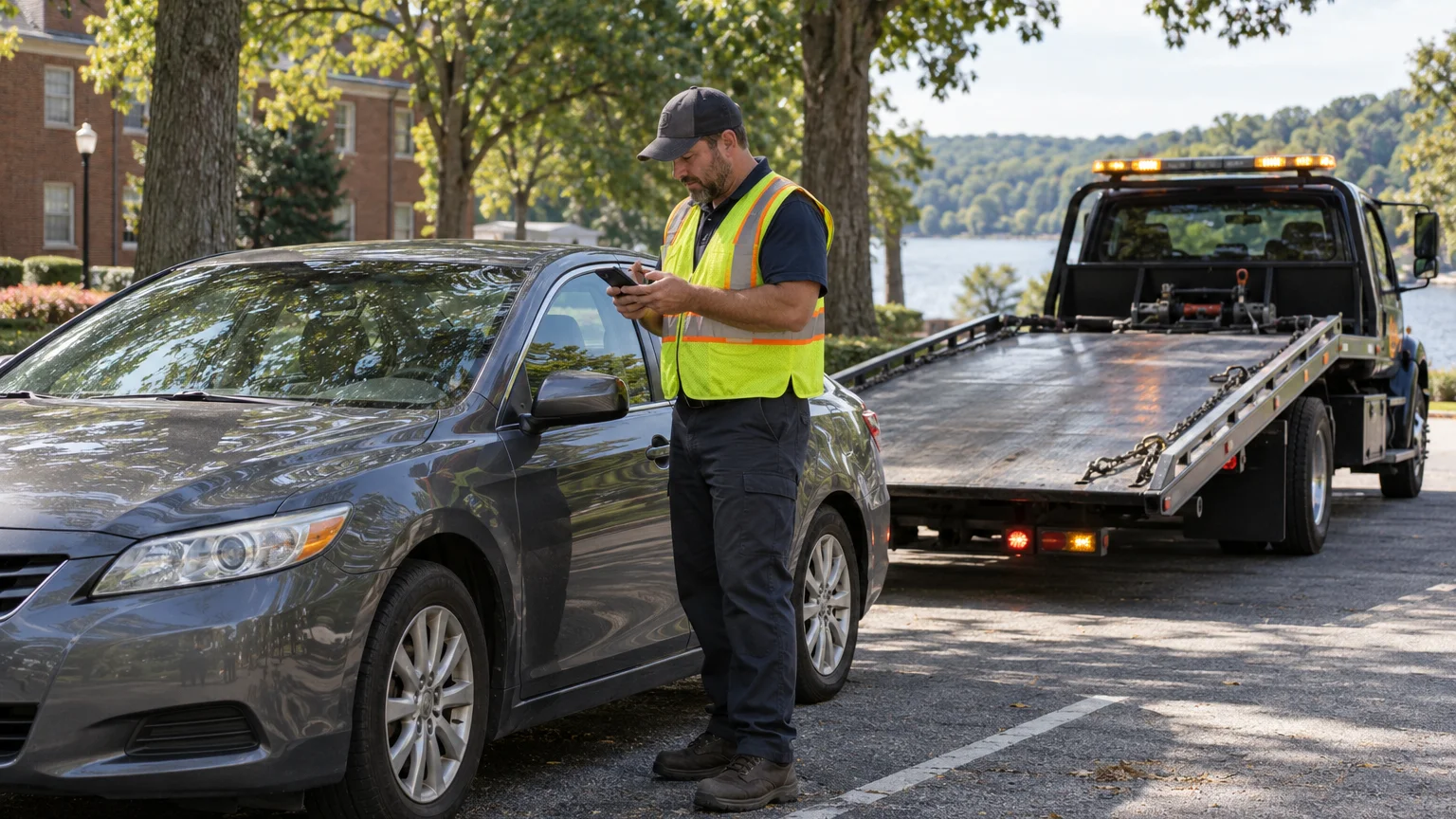
For roadside assistance Lakeside VA drivers should first share their exact location and what the car did. An operator can then decide whether roadside help is appropriate or towing is the better next step. You don’t need to diagnose the problem yourself.
A no-start can happen at home, beside a curb, or outside a business. The right choice depends on what happened, where the car sits, and whether it can be moved safely.
Getting roadside assistance Lakeside VA starts with your location
Give the operator a location that someone unfamiliar with the property can find. A street address is useful, but it may not identify your actual position.
For a home pickup, explain whether the car is in a driveway, behind the house, or along the street. Mention any narrow entrance, gate, low branch, or parked vehicle blocking access. Don’t promise that a certain truck will fit. Just describe what’s there.
In a shopping area, share the business name and your section of the lot. Landmarks such as an entrance, loading area, or cart return can narrow the search. If the property has several driveways, say which one is closest.
Use “Lakeside, Henrico” when giving the general area. That helps distinguish the pickup from other Richmond Metro locations with similar street or business names. If you send a phone location pin, include a written description too.
Tell the operator whether the car is fully inside a parking space. If it’s partly in a travel lane or another exposed spot, say that first. Don’t stand between the car and moving traffic while waiting.
Quick Tow Richmond takes the details through a recorded line. We then refer the request to an independent operator. The operator handles the service agreement and bills you directly.
Explain what the car did, not what caused it
Describe the sequence you observed. Keep it short and literal.
Say whether the dashboard lit up when you turned the key or pressed the start button. Describe any sound using ordinary words. You might report silence, a click, repeated clicking, or the engine turning without starting. These details describe the event without declaring which part failed.
Also mention anything that happened shortly beforehand. Perhaps the car was parked for a while, stopped after driving, or didn’t respond after you returned from a store. Don’t remove parts or try unfamiliar electrical work while waiting.
If someone already attempted a jump, tell the operator what happened afterward. A car that still won’t start may need a different next step. Our guide to a car that won’t start after a jump explains how to prepare for a possible tow.
Have the vehicle’s make, model, and approximate location ready. Tell the operator if the keys are available. Mention whether the transmission can move out of park, but don’t force it.
Clear observations help the operator discuss options. A diagnosis should come from someone qualified to inspect the vehicle, not from a guess made over the phone.
Work out whether roadside help is enough
Roadside service may be the first option when the car remains parked and accessible. The operator can review your description and explain what service they can provide at that location.
A jump-start request doesn’t prove the battery caused the no-start. It only identifies the service you’re asking about. If you’re comparing that option, read our guide to jump-start service costs in Richmond before agreeing to the work.
Tell the operator whether another jump has already been attempted. Explain whether the car started, stayed running, or remained unresponsive. Don’t repeatedly attempt a jump if you’re unsure about the connections or the vehicle’s requirements.
Our roadside assistance service page covers the basic information to have ready. The operator should determine what can be attempted based on the vehicle, access, and reported condition.
The roadside-versus-tow decision may change after the operator reaches the car. A roadside attempt might not make the vehicle usable. Ask what happens if the requested help doesn’t resolve the problem and towing becomes necessary.
For breakdowns on I-95, I-64, or I-295, VDOT’s Safety Service Patrol provides free roadside assistance and incident management. It can provide jump starts and help arrange a tow, but it doesn’t perform mechanical repairs or act as a towing company. Check 511 Virginia for current traffic and incident information.
Pick the destination before a tow begins
Choose a destination while the car is still parked. That decision makes the towing request clearer and helps you compare the complete charge.
You may want the car taken home, to a repair shop, or to another lawful location. Confirm that the destination can receive the vehicle. Don’t assume a closed business has an open drop-off area or permits unattended deliveries.
Share the full destination address with the operator. A shop name alone may be unclear when several businesses have similar names. If the destination is outside Lakeside, identify the city or county as well.
Think about access at both ends. Tell the operator if the car is inside a garage, behind a gate, or tightly boxed into a parking space. At the destination, mention steep driveways, restricted entrances, or limited parking. These details help the operator assess the request without you selecting equipment yourself.
Keep your keys available unless the operator gives different instructions. Remove valuables and anything you’ll need before the vehicle leaves. Virginia law allows vehicle owners, after proving ownership, to recover personal items from a towed vehicle without retrieving the entire vehicle or paying a retrieval fee. However, state law doesn’t set universal access hours, so calling a storage location first is sensible.
If roadside help won’t resolve the no-start, review the available emergency towing service and discuss the destination directly with the independent operator.
Confirm the complete charge before agreeing
Ask for the complete charge before service begins. Include the exact Lakeside pickup point and chosen destination when requesting it.
Confirm whether the quoted amount covers the requested roadside attempt, mileage, and any tow that may follow. If those are separate services, ask for each charge separately. Don’t treat an opening figure as the final total unless the operator confirms what it includes.
Quick Tow Richmond doesn’t set the independent operator’s total. The operator contracts with you and bills you directly. That makes it important to confirm the complete amount with that operator before agreeing.
Ask what changes if the vehicle can’t be started roadside. You should know whether the operator can then tow it, where it will go, and how that affects the total. If another operator would handle the tow, request that information before the car is moved.
Don’t confuse voluntary roadside or towing charges with legal ceilings for nonconsensual private-property towing. Those rules address a different situation. They don’t tell you what a driver-requested Lakeside service will cost.
Save any written estimate, receipt, or service message you receive. Check the destination before departure and make sure the operator has the correct address. A few clear confirmations can prevent confusion when a roadside request turns into a tow.
When to call us
Call when your car won’t start in Lakeside and an independent licensed towing pro may need to assess roadside help or arrange transport. The recorded line takes calls at any hour, and a notice plays before your message is recorded. Call us at (804) 701-6752.