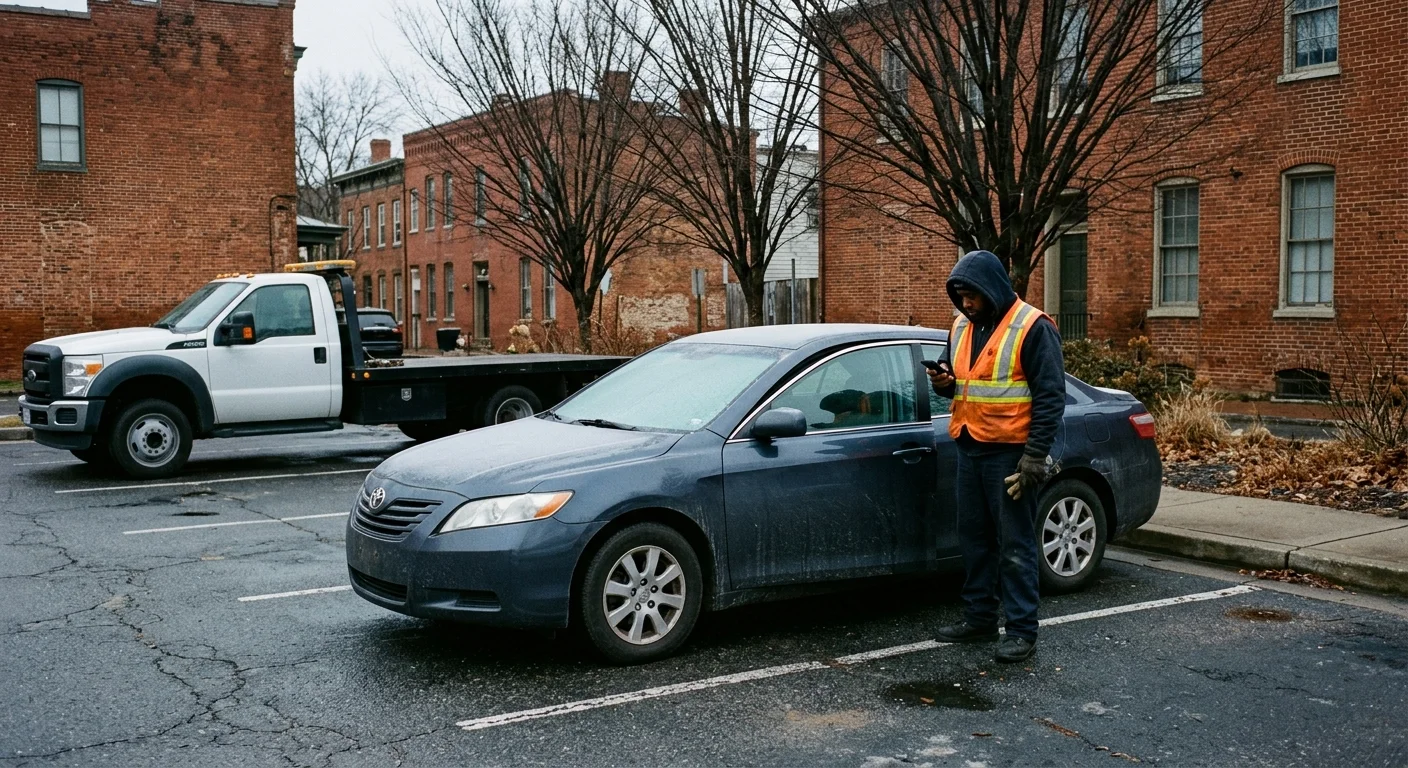
There is no verified public dollar figure for jump start service cost in Richmond. The amount you pay is the independent operator’s full quote for this call. It moves with where you’re stuck, how hard the car is to reach, and whether a boost will even hold.
A dead battery on a Fan street at dawn can look like a small job. A no-start on the I-95 shoulder through the downtown overlap is a different one. Get the total before anyone connects cables.
Jump start service cost starts with the full quote, not one fee
A jump is a roadside stop, not a posted menu price. Quick Tow Richmond matches you with independent licensed operators. Those operators contract with you and bill you directly. We don’t set their total. We don’t publish a jump-start price either. No confirmed local figure turned up to print.
National roundups like to list ranges. Those numbers aren’t Richmond quotes, and they aren’t ours. Get the full charge on the phone, with the drive to you included, before anyone starts.
The quote should cover the whole visit: getting to you, reaching the battery, the boost, and what you owe if the engine still won’t run. A low-sounding hook that leaves mileage off the call isn’t a total. Name the street, the garage level, or the mile marker. Then have them repeat the dollar amount back.
Memberships, insurance add-ons, and factory roadside plans can change what you pay out of pocket. In Virginia, towing and roadside coverage is an optional policy add-on, not a required coverage. The State Corporation Commission’s auto-insurance guide names towing coverage as an optional line. It doesn’t set a jump price. Check your policy, your card benefits, and any new-car plan before you assume the stop is free. Some plans send help and still pass the service charge to you.
On I-95, I-64, and I-295, VDOT’s Safety Service Patrol can jump a stalled car at no charge when a patrol is already working that route. That’s free roadside help, not a private dispatch. SSP doesn’t do mechanical repairs and doesn’t act as a tow company. Paid roadside assistance is the path when you’re off those interstates, or when a patrol isn’t there.
How location and access change the work
Metro Richmond isn’t one parking lot. A sedan in a Lakeside driveway is a short, quiet stop. The same car on I-95 at the I-64 overlap, from the Bryan Park interchange south toward the James, sits in what a VDOT overlap study calls “one of the highest crash, heavily congested corridors in the region.” Shoulder work there takes more setup and more care once the operator is on scene.
Access changes the work too. Tight street parking in The Fan during a VCU term makes hoods hard to reach. A Short Pump garage with a low bar is a different problem than a surface lot off Midlothian Turnpike. Chesterfield parking decks and gated apartments add a code, a height limit, or a long walk from where a service vehicle can sit. Tell the operator all of that on the first call.
Distance inside the metro still belongs in the total. Downtown, the Museum District, and Oregon Hill are a different run than Hopewell, Petersburg, or Ashland off I-95. We don’t publish a per-mile jump figure. Mileage is still something you should hear in the number you approve. If you’re between cities, name the locality and a cross street.
Interstate vs neighborhood also changes who can help. SSP daytime patrols on the Richmond-area interstates run 5:00 a.m. to 9:00 p.m. An overnight I-95 route runs 9:00 p.m. to 5:00 a.m. between the I-295 interchange in Hanover County (mile 84) and Route 10 in Chester (mile 61). On I-95, I-64, and I-295, check 511 Virginia for backups while you wait in a safe spot. Put the hazards on. On highways with four or more lanes, Virginia’s move-over law requires other drivers to change lanes away from a stopped vehicle with flashing lights or hazards, or to slow down if they can’t change lanes. That protects you. It doesn’t replace a quote.
If the car is in a live travel lane, the job may stop being a jump. Clearing the roadway can mean a tow. Say exactly where the wheels sit before anyone rolls.
When a jump is the wrong call
A jump fixes one thing: a battery that still accepts a charge but can’t crank the engine right now. Lights left on in a Carytown lot. A car that sat through a cold January night. Richmond’s seasonal snowfall average is 8.8 inches, and January averages 3.7 inches. Cold mornings here do drain weak batteries. A boost can be the right call in that case.
A jump is the wrong call when the charging system, the starter, or the battery itself has failed. If the engine catches and dies the moment the cables come off, the alternator is a likely suspect. If you get a click and nothing after a clean boost, you may need a tow to a shop, not a second boost. Paying twice for the same no-start wastes the first stop.
Flooded cars aren’t jump jobs. Shockoe Bottom still takes on water fast. The remnants of Hurricane Gaston stalled over Richmond on August 30, 2004, and floodwater there reached 10 feet. Water in the engine bay is a tow and a shop inspection.
Crash damage is the same split. If the car won’t roll or the electrical system is torn up, skip the cables. Arrange emergency towing and get the vehicle off the road.
If a boost already failed, stop repeating it. When the car won’t start after a jump, the next step is a tow, not another set of cables. Tell the operator what you already tried.
Hybrids, EVs, and some European models have packs and computers that don’t treat a casual boost as a small favor. We can’t confirm a special local price for those vehicles. Name the make, model, and year so the operator can say whether they’ll attempt a jump or come ready to tow.
What to confirm before anyone starts
Have the location, the vehicle, and the money question ready before you call.
Give a place an operator can actually find. “Near the Boulevard” isn’t enough. Use a street address, a garage level, an I-95 mile marker, or an exit. Add the city or county: Richmond, Henrico, Chesterfield, or the Tri-Cities. The Fan, Scott’s Addition, and Manchester are easy to mix up on a phone line.
Name the car. Year, make, model, and whether it’s a sedan, SUV, van, or work truck. Mention a locked wheel, a lowered stance, or a packed lot. Those details change equipment. They aren’t a surcharge we can print as a set local fee.
Then lock the number. Ask for the full total with travel. Ask what you owe if the engine still won’t run. Ask what payment the operator takes on scene. Virginia towing and recovery operators must accept cash, certified checks, money orders, or a credit card, and they must display a fee list. Get that list turned into a dollar amount for this stop before cables come out.
Don’t confuse a weekend calendar with a price. Saturday and Sunday timing is covered in our weekend jump-start service guide. This page is the cost question. An operator may quote a different total after dark or on a holiday. We can’t confirm a Richmond after-hours jump surcharge as a set fee. If they add one, it has to sit inside the total you accept.
Our line takes calls 24/7 through a recorded line. A recording notice plays before you leave a message. No live dispatcher answers, and we don’t promise a callback time. Leave the location, the vehicle, and a number that will ring.
Keep a receipt if you plan to claim it
If you think insurance, a motor club, a factory plan, or a card benefit will reimburse the stop, get paper. Ask the operator for an itemized receipt: date, location, vehicle, service performed, and the total you paid. Photograph it before you drive off.
Virginia doesn’t require auto insurers to cover jump starts. Coverage lives in your policy, not in a statewide mandate. File against the add-on you actually bought. If the claim is denied, the receipt still shows what you paid the independent operator.
Keep the operator’s business name as it appears on the slip. Quick Tow Richmond is the referral line. The company that bills you is the one your insurer will ask about.
If the jump fails and the next move is a tow, keep both receipts separate. A boost and a hookup are different line items. Mixing them in one vague charge makes reimbursement harder.
Don’t wait on a formal towing hearing for a jump-start bill. Virginia runs no scheduled administrative hearing for that. For towing and recovery complaints, consumers can file with the Division of Consumer Counsel at the Office of the Attorney General. A jump that never became a tow starts as a billing conversation with the operator who quoted you.
Frequently asked questions
How much do jump starts cost?
No confirmed Richmond dollar figure turned up for a private jump. Get the independent operator’s full total, travel included, before work starts.
How much is a jump start call out?
The call-out belongs in that same quote, not as a surprise later. Location and access are what usually move it. If the operator can’t say the full number, wait.
Will a car jump-start with a dead battery?
It will if the battery can still take a charge. A battery that won’t hold, a failed alternator, or a dead starter won’t be fixed by cables. Then you need a tow to a shop.
Is $200 expensive for a car battery?
A replacement battery price for Richmond couldn’t be confirmed here. That’s a parts-and-install quote from a shop or parts counter, separate from the roadside boost. Ask the shop for today’s price before you approve a swap.
Can VDOT jump my car for free?
On I-95, I-64, and I-295, Safety Service Patrol can jump a stalled vehicle as free roadside help when a patrol is working that route. It isn’t a private dispatch number, and it won’t repair the car.
When to call us
If the car won’t crank and you need an operator for a boost, or the boost already failed and the car has to leave the lot, call. The line takes calls 24/7. Call us at (804) 701-6752.