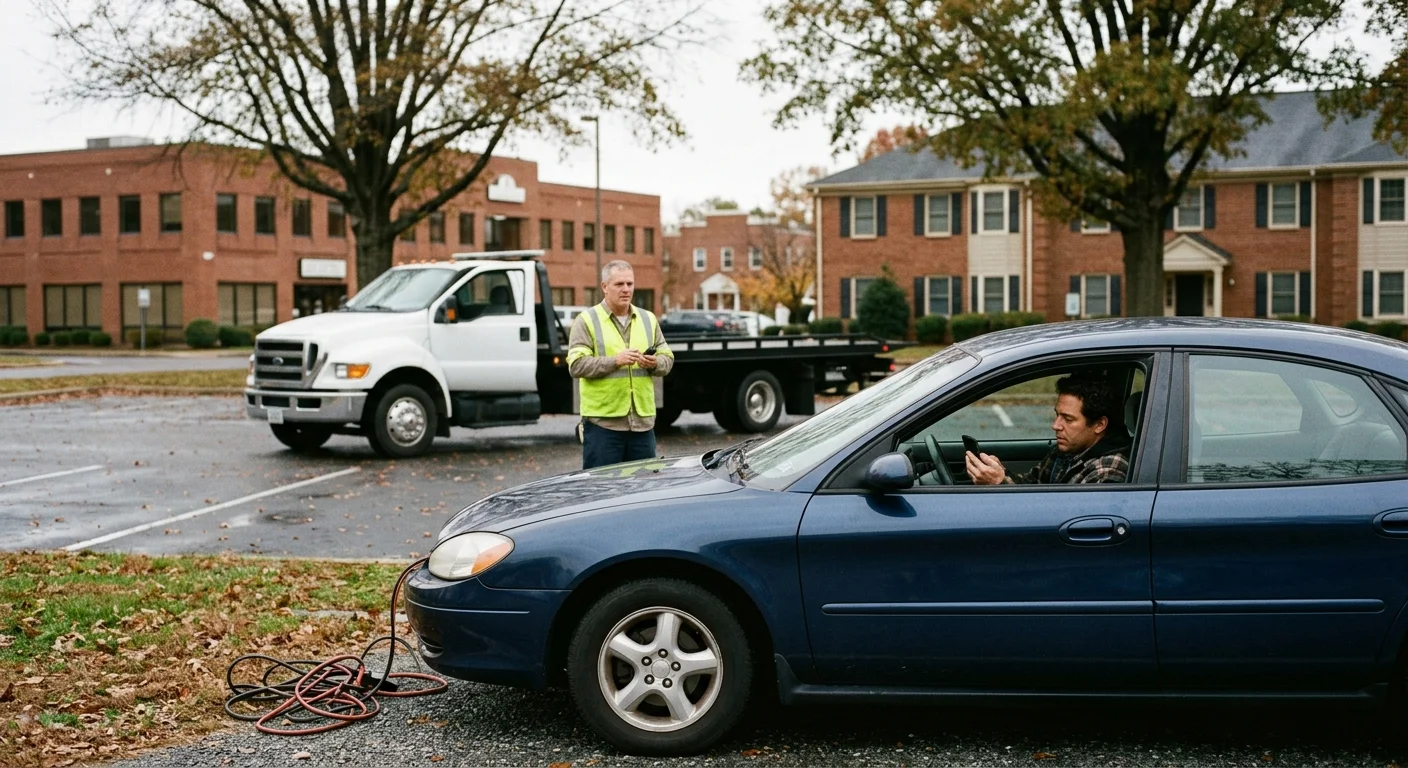
When a car won’t start after jump start help, treat the cause as unknown and consider arranging a tow. Stop repeating the attempt, record what happened, and choose where the vehicle should go before requesting service.
That information helps an operator understand the request without guessing at the problem. It also helps separate another roadside request from a towing job.
Stop repeating the attempt when your car won’t start after jump start
Repeating the same jump attempt won’t tell you what failed. It can also blur useful details about the first attempt. Pause and write down what you observed instead.
Start with the vehicle’s exact location. A space number, garage level, entrance, or nearby storefront can help. In the Fan, where parking is limited, note the street and block. Around VCU, include the closest intersection or building entrance.
Location matters even more along Richmond’s interstate network. Specify I-95, I-64, or I-295, plus your direction of travel. Include the nearest exit, mile marker, or recognizable interchange. The I-95 and I-64 overlap through downtown runs from around the Bryan Park interchange toward the James River. Saying only “near downtown” leaves too much room for confusion.
If you’re on an interstate, check 511 Virginia for current traffic and incident information. VDOT’s Safety Service Patrol covers Richmond-area routes including I-95, I-64, and I-295. The patrol provides free roadside services such as jump starts and can help move a disabled vehicle from the roadway. It doesn’t perform mechanical repairs or replace a towing company.
For a vehicle in a driveway, lot, or garage, note anything affecting access. Tell the operator about gates, low clearance, narrow lanes, locked wheels, or missing keys. Don’t assume every disabled vehicle can be handled the same way.
Share what happened around the jump attempt
Give a short timeline instead of naming a suspected part. Begin with what happened before the jump. The vehicle may have been parked overnight, stopped during a trip, or failed after a brief stop. Those are observations, not diagnoses.
Next, describe the jump itself. Say whether another vehicle or a portable device was used. Report whether the dashboard changed, the cabin lights appeared, or the engine made a sound. Useful descriptions include silence, one click, repeated clicking, or the engine turning without starting.
Don’t turn those sounds into a conclusion. A caller doesn’t need to decide whether the battery, starter, alternator, or another electrical part caused the failure. The towing operator needs the condition of the vehicle and the requested destination.
Mention whether the vehicle started briefly and then stopped. Also report smoke, an unusual smell, leaking fluid, or visible damage if you noticed any. Describe only what you saw, heard, or smelled.
If the first request was for roadside assistance, explain that a jump has already been attempted. This helps the referral line understand why another identical request may not match your situation.
Drivers needing help outside normal business hours can also review our guide to weekend jump-start service in Richmond. That article explains how roadside help fits into a weekend breakdown. Your current request should still focus on what happened during this specific attempt.
Describe warning lights without diagnosing them
Warning lights are useful identifiers, but they aren’t a diagnosis from the driver’s seat. Tell the operator which symbols or words appeared and when they appeared. If you don’t recognize a symbol, describe its color and shape.
Separate normal observations from interpretations. “A red battery-shaped light stayed on” is clearer than “the alternator is dead.” Likewise, “the security light kept blinking” reports what happened without naming a failed system.
A photo can preserve the dashboard display before the screen changes. Make sure the image captures the full instrument panel. You can then read the wording or describe the symbol during the call.
Also note whether the gear selector moves normally and whether the steering or wheels appear locked. Tell the operator if the parking brake won’t release, the keys are missing, or the vehicle can’t be placed in neutral. These details can affect how the operator plans the tow, but they don’t identify the underlying fault.
Vehicle details matter too. Have the year, make, model, and general vehicle type ready. Mention modifications, very low ground clearance, or visible collision damage. If you’re unsure whether the vehicle needs a particular towing setup, say so. The operator can consider the vehicle’s condition before accepting the job.
For Richmond drivers, the pickup setting may change the access plan. A street space in the Fan differs from a multilevel garage in Chesterfield. An interstate shoulder differs from a shopping-center lot along Midlothian Turnpike. Accurate descriptions help the operator prepare for the actual location.
Pick a destination before requesting the tow
A tow request needs a destination. Decide whether the vehicle should go to a repair shop, dealership, home, or another location where you have permission to leave it.
Call the destination before committing when possible. Confirm that it can receive the vehicle and that you know where the vehicle should be placed. An address alone may not identify the correct service entrance, after-hours drop area, or parking space.
The nearest destination isn’t always the right one. A shop may not work on your vehicle type. Your usual shop may be across Richmond, Henrico, or Chesterfield. A home destination may make sense when the repair decision hasn’t been made yet.
Our guide to choosing whether to tow to a nearby shop or take the car home walks through that decision. Make the choice before requesting the operator when you can. Changing the destination after the trip begins may alter the route and total charge.
Ask for the full total, with mileage included, before agreeing. The brand connects you with an independent operator, and that operator contracts with and bills you directly. Quick Tow Richmond doesn’t set the operator’s total.
Give both pickup and destination addresses during the request. Mention gates, garage clearance, loading areas, or access instructions at either end. For a downtown pickup, identify whether the vehicle is north or south of the James. For a suburban address, include the correct county because Richmond, Henrico, and Chesterfield are separate jurisdictions.
Verify whether roadside help or towing is being sent
Use direct language when making the request. Say that a jump was already attempted and the vehicle still doesn’t start. Then state whether you want another roadside assessment or a tow to the destination you’ve selected.
That distinction prevents a mismatch. Roadside assistance covers help delivered where the vehicle sits. Towing moves the disabled vehicle to another place. If you already know you want transportation rather than another jump attempt, say that clearly.
Confirm the pickup point, destination, vehicle description, and access limits. Ask what kind of service the independent operator is accepting. If the vehicle has locked wheels, missing keys, collision damage, low clearance, or garage restrictions, repeat that detail before agreeing.
For an interstate breakdown, tell the operator your travel direction and nearest marker. VDOT Safety Service Patrol may provide roadside help and move a disabled vehicle from the roadway, but it isn’t a towing company. You may still need to arrange your own tow after that assistance.
For a vehicle stranded somewhere more exposed or difficult to access, request emergency towing and explain the setting plainly. Don’t treat “emergency” as an arrival-time promise. It describes the service need, not a guaranteed response window.
Finally, confirm the operator’s full quoted total, including mileage, and the planned destination. Don’t rely on a partial figure or assume roadside help automatically includes towing. Clear terms make the next step easier while the cause remains unconfirmed.
When to call us
Call when the vehicle still won’t start after the jump and needs a licensed towing pro to move it. Our recorded line takes calls 24/7, plays a recording notice, and connects requests with independent operators. Call us at (804) 701-6752.