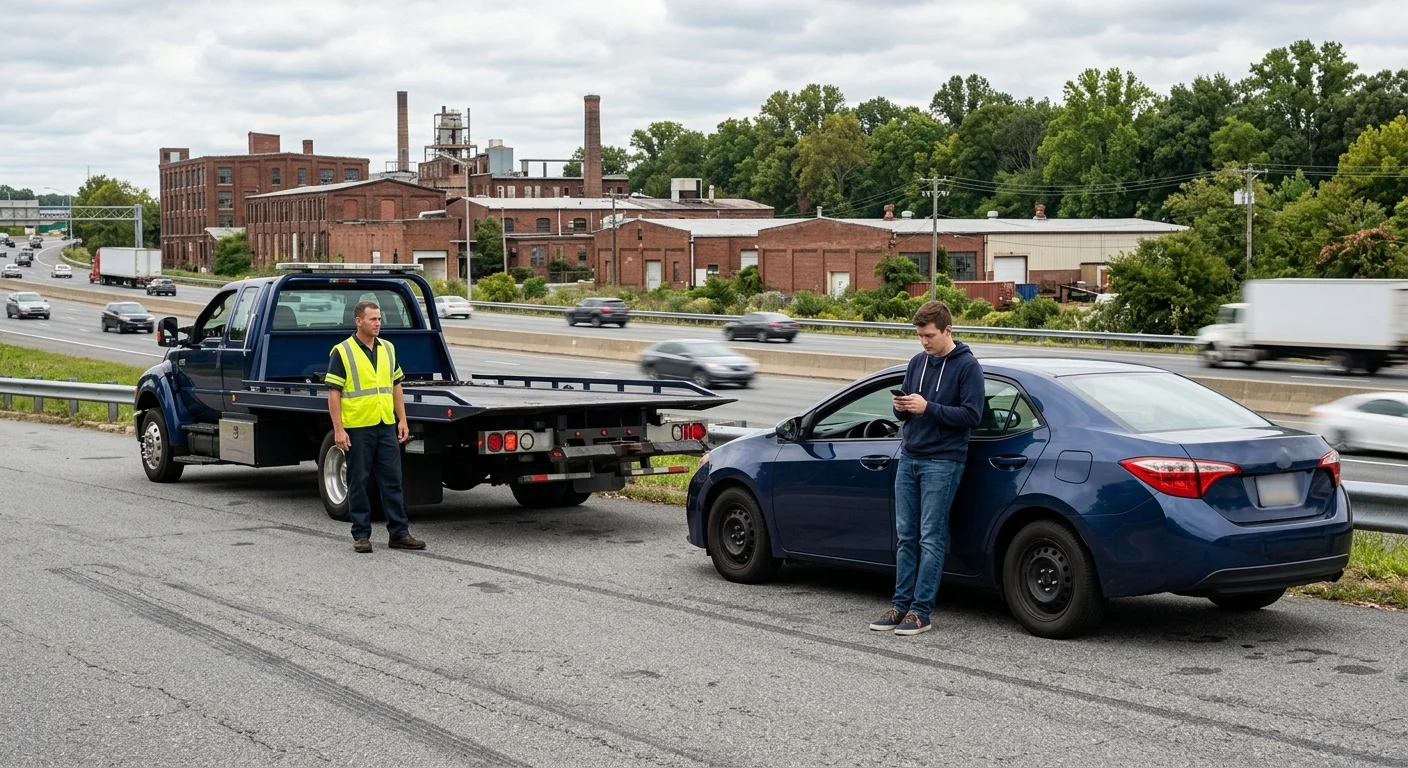
A breakdown during a longer trip forces a destination choice before dispatch. The choice to tow car home or nearest repair shop should follow one rule: pick the destination that gives you the clearest workable next step. Choose a nearby shop when it has agreed to receive the car, or choose home when you need control of the vehicle and can arrange repairs later.
Start with what happens after the tow: tow car home or nearest repair shop
The tow ends at an address, but your problem may not. Think through the next several steps before naming a destination.
A repair shop can be useful when someone there has confirmed the intake plan. Call the specific location, not just a central number. Ask whether it works on your type of vehicle and whether it can accept the car. Confirm where the operator should leave it and how the keys will be handled.
Taking the car home gives you more control over timing. It can also leave you needing another tow later. Make sure the drop-off location is accessible and available for the vehicle. If you don’t control that space, check with the property owner or manager first.
Use these questions to compare both choices:
- Has the repair shop agreed to receive the car?
- Can someone meet the operator at either destination?
- Where will the keys go after drop-off?
- Will choosing home create another transportation problem?
- Could taking the car home require a second tow?
- What is the full towing total to each address?
Passenger plans matter too. Don’t assume everyone in your vehicle can ride with the operator. Ask what transportation is available, then arrange a separate ride if needed.
When the better destination is outside Richmond Metro, review how our long-distance towing referral service works before choosing an address.
When a nearby destination may make sense
A nearby repair shop may be the cleaner choice when it has accepted the vehicle. This keeps the car near the breakdown area and puts it where diagnosis may begin. It also avoids taking a disabled vehicle home without a repair plan.
“Nearby” shouldn’t mean the first map result. Richmond’s road network crosses the City of Richmond, Henrico, and Chesterfield. A shop that looks close on a map may sit across the James River or opposite your direction of travel. That can complicate your ride, lodging, or return trip.
Call the shop and ask specific questions:
- Does it service your make and type of vehicle?
- Can it receive the car when the operator arrives?
- Where should the car and keys be left?
- Who can authorize inspection or repair work?
- Are there charges before any work begins?
- When should you contact the shop again?
If the shop is closed, ask whether it accepts vehicles outside its normal hours. Get clear instructions for the operator. Don’t send the car to a locked property without confirming the arrival process.
A nearby destination makes less sense when the shop can’t examine the vehicle or won’t accept it. In that situation, home or another confirmed location may prevent another move.
If the car needs to be moved from its current location, our emergency towing service explains how we connect callers with independent operators.
What changes when you take the car home
Taking the car home separates the towing decision from the repair decision. That can help when you already have a preferred mechanic or need time to compare your options. It also keeps the vehicle at a location you can reach.
Home isn’t automatically the simpler destination. You still need a suitable drop-off point. Think about the driveway, parking area, gate, surface, and available space. Tell the operator about those conditions before dispatch. If the address has access restrictions, confirm an acceptable location with whoever controls the property.
Next, decide what will happen after delivery. The car may need another tow to a repair facility. You may also need to arrange keys, paperwork, and transportation around that second move. Compare that sequence with sending the car directly to a confirmed shop.
For a traveler, “home” may mean a destination well beyond Richmond. In that case, compare two complete plans. One plan takes the vehicle home now. The other leaves it with a Richmond-area shop while you arrange the rest of your trip. Consider who can receive the car, how you’ll return, and whether you’ll need another vehicle move.
Share the car’s condition and both addresses when requesting a total. The pickup point and destination can change what the operator needs to plan. If you’re considering a longer move, read our guide to long-distance towing prices in Richmond before agreeing.
Plan around an I-95 breakdown far from home
Richmond sits on a major I-95 travel path. A breakdown might happen north of the Bryan Park interchange, along the downtown I-95/I-64 overlap, or south toward Chester and Petersburg. Your best destination may depend on which direction you were traveling.
Start by recording your exact location. An exit, interchange, nearby landmark, and travel direction are more useful than saying you’re “near Richmond.” Then compare destinations against your original route. A nearby shop behind you may require backtracking. A shop ahead may fit your trip better, but only if it has agreed to take the vehicle.
An I-95 traveler usually has three practical destination plans:
- Send the car to a confirmed Richmond-area repair shop.
- Tow it home and arrange repairs there.
- Leave it at an agreed location while continuing the trip another way.
Each plan creates different needs for keys, passengers, luggage, lodging, and the return trip. Work through those details before the vehicle moves.
VDOT Safety Service Patrol covers I-95, I-64, and I-295 in the Richmond area. It provides free roadside assistance and incident management. Its services include tire changes, fuel delivery, jump starts, radiator water, and help arranging a tow. It doesn’t perform mechanical repairs or act as a towing company.
Use 511 Virginia for current traffic and incident information. Our guide on what to do after an I-95 breakdown covers the immediate roadside steps in more detail.
Confirm the full charge before dispatch
Ask for the full total with mileage included before agreeing to a tow. Give the operator an exact destination address. “The closest shop” or “somewhere near home” isn’t enough for a meaningful comparison.
Quick Tow Richmond is a referral service. We connect callers with independent towing operators. The operator contracts with and bills the driver directly, and we don’t set that operator’s total.
Describe the vehicle and its condition clearly. Provide the precise pickup point, destination, key location, and drop-off instructions. Ask whether the quoted total includes the hookup, mileage, and any other expected charge connected with the move. If something isn’t included, ask what could add to the total.
Get separate totals for the shop and home addresses. Use the same vehicle details for both. That gives you a cleaner comparison between a shorter tow with an uncertain repair plan and a longer tow to a location you control.
Don’t treat private-property towing ceilings as a quote for this breakdown. Those ceilings govern nonconsent towing situations. They don’t establish the total for a consensual tow that you request after a breakdown.
Ask for an itemized breakdown and keep the final receipt. If you change the destination after dispatch, ask how that change affects the total before the operator continues. A clear address and agreed total help keep the destination decision separate from the stress of the breakdown.
When to call us
Call when your car can’t continue and you need a licensed towing pro to move it to a confirmed address. Quick Tow Richmond’s recorded line takes calls 24/7, and a recording notice plays before you leave a message. Call us at (804) 701-6752.