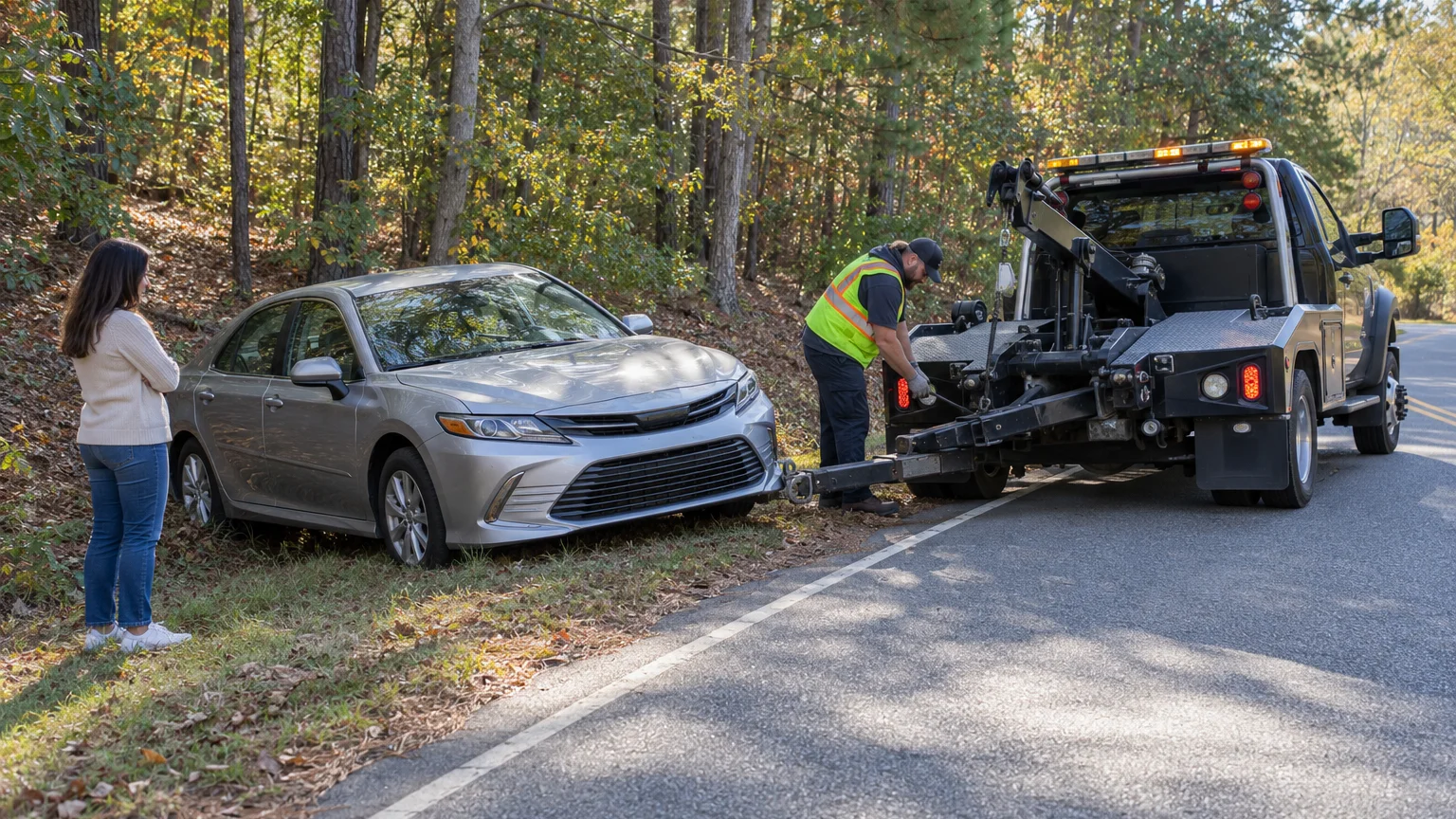
A car beyond the pavement in Brandermill needs a recovery request, not a guess about pulling it free. For winch out service Brandermill VA, describe the vehicle, surface, damage, and access. Quick Tow Richmond can then refer the request to an independent operator.
A useful call starts with what you can see. The operator can decide how the recovery should proceed after reviewing those details.
Stay clear while requesting winch out service Brandermill VA
Start the request with the vehicle’s location and position. Explain how far it sits from the pavement and whether it affects a travel lane. Mention any visible obstacles around it.
A recovery professional can inspect the scene before deciding how to proceed. Your description helps the operator understand the request before arriving.
Tell the recorded line if anyone is hurt or if the vehicle is creating an immediate road hazard. Quick Tow Richmond’s line refers towing requests, but it isn’t an emergency-response agency.
You can check 511 Virginia for official traffic and incident information on Virginia roads. That can help when the recovery affects a larger route or when you need to plan where the vehicle may go afterward.
Report whether passengers or pets are present. Mention any belongings that need to remain with the vehicle or travel with you.
The car may look close to the pavement while parts remain hard to see. The referred operator can inspect the wheels, steering, and underside before deciding how to proceed.
Describe the vehicle’s position
Start with the vehicle type and its exact position. Say whether the whole car left the pavement or only one side did. Mention which end points toward the road and which wheels remain on a firm surface.
Simple descriptions help more than guesses. You might say the front wheels are beyond the pavement, the passenger side sits lower, or the rear faces the road. Report whether the car appears upright and whether anyone remains inside.
Give the nearest reliable location detail you have in Brandermill. A street name, nearby intersection, property entrance, or map pin can help identify the scene. Don’t depend on a vague description such as “near the neighborhood entrance.”
Describe what surrounds the car. Note visible trees, posts, fences, parked vehicles, drainage features, or other objects that may limit access. Say whether another vehicle can approach from the front, rear, or either side. Don’t decide which approach the operator should use.
Also state whether the vehicle is blocking traffic or sitting entirely beyond the traveled surface. If police, fire personnel, or another authority is already present, mention that during the request.
For a fuller explanation of how recovery differs from ordinary towing, read tow or winch-out after leaving the road. Brandermill callers should focus on the facts visible at their own scene. Each vehicle position and access point needs an individual assessment.
Share photos of the surface and access
Photos can show details that are difficult to explain by phone. Current images can help the operator review the vehicle’s position and surrounding access.
Begin with one wide photo showing the car and pavement together. Take another from a different angle if one is available. The goal is to show how far the vehicle traveled, how it sits, and how an operator might reach the scene.
Include the surface around the tires. A photo may show grass, gravel, mud, standing water, loose soil, or firm ground. Report what the surface looks like in the images.
Photograph the route leading toward the vehicle. Show narrow entrances, turns, overhanging branches, gates, parked cars, or other visible access limits. If darkness or glare hides an area, say that instead of presenting the photo as complete.
Avoid close-ups that remove all context. A tire filling the frame won’t show the vehicle’s angle or distance from the road. A wide scene photo and a few focused images usually communicate different information.
Send only current photos from that incident. Don’t use older pictures of the road or vehicle. Tell the operator if weather, traffic, or another vehicle changes the scene after the images were taken.
Quick Tow Richmond forwards the request to an independent operator. The operator decides what information is sufficient and how to handle the recovery. Photos help with that review, but they don’t replace an on-scene inspection.
Report visible damage without diagnosing it
Describe only what you can see, hear, or smell. Don’t tell the operator that the car is mechanically sound unless a qualified professional has checked it.
Useful observations include a wheel sitting at an unusual angle, a hanging panel, broken glass, deployed airbags, or fluid visible beneath the vehicle. You can also report warning lights, unusual sounds, smoke, or an odor.
Say whether the engine is currently running. Report whether the doors open normally and whether the steering wheel or controls appear damaged. If the keys are missing or locked inside, mention that as well.
Damage may affect what happens after the vehicle returns to pavement. That’s why the request should cover both recovery and possible transport. Our accident recovery and winch-out service explains the referral option for vehicles that have left the road.
A minor-looking incident can still leave you uncertain about driving. The guide to deciding whether a car needs towing after a minor crash covers the information to gather before arranging transport.
Don’t ask for a promise that recovery will cause no further damage. Instead, give the operator a clear account of existing damage and ask how the planned work addresses the vehicle’s position. Accurate observations create a better starting point than a diagnosis made beside the road.
Confirm whether towing follows the recovery
A winch-out request answers one question: how to recover the vehicle from its current position. It doesn’t automatically answer whether the car should be driven afterward.
Tell the referred operator where you want the vehicle taken if towing becomes necessary. That might be a repair facility, another approved destination, or a place chosen with the vehicle owner. Confirm the destination before work begins.
Ask whether the quote covers recovery only or recovery followed by towing. Request the full total with mileage included before agreeing. No Brandermill-specific recovery price was confirmed for this page, so verify the current charge directly with the independent operator.
Quick Tow Richmond publishes a standard light-duty hookup fee of $105. That figure covers the published hookup rate only. The brand doesn’t set the independent operator’s final bill, and the amount doesn’t establish a total for off-road recovery, mileage, towing, or storage.
Be ready to explain whether the vehicle rolls, whether the wheels appear straight, and whether the keys are available. The operator can determine what towing method fits after inspecting its condition.
If transport is needed after the recovery, our emergency towing referral page explains how to request towing. Confirm the destination, payment terms, mileage, and complete quoted total with the operator before authorizing the job.
When to call us
Call when your vehicle has left the pavement and needs assessment by a licensed towing professional. Our recorded line takes calls all day and night, plays a recording notice, and refers requests to independent operators. Call us at (804) 701-6752.