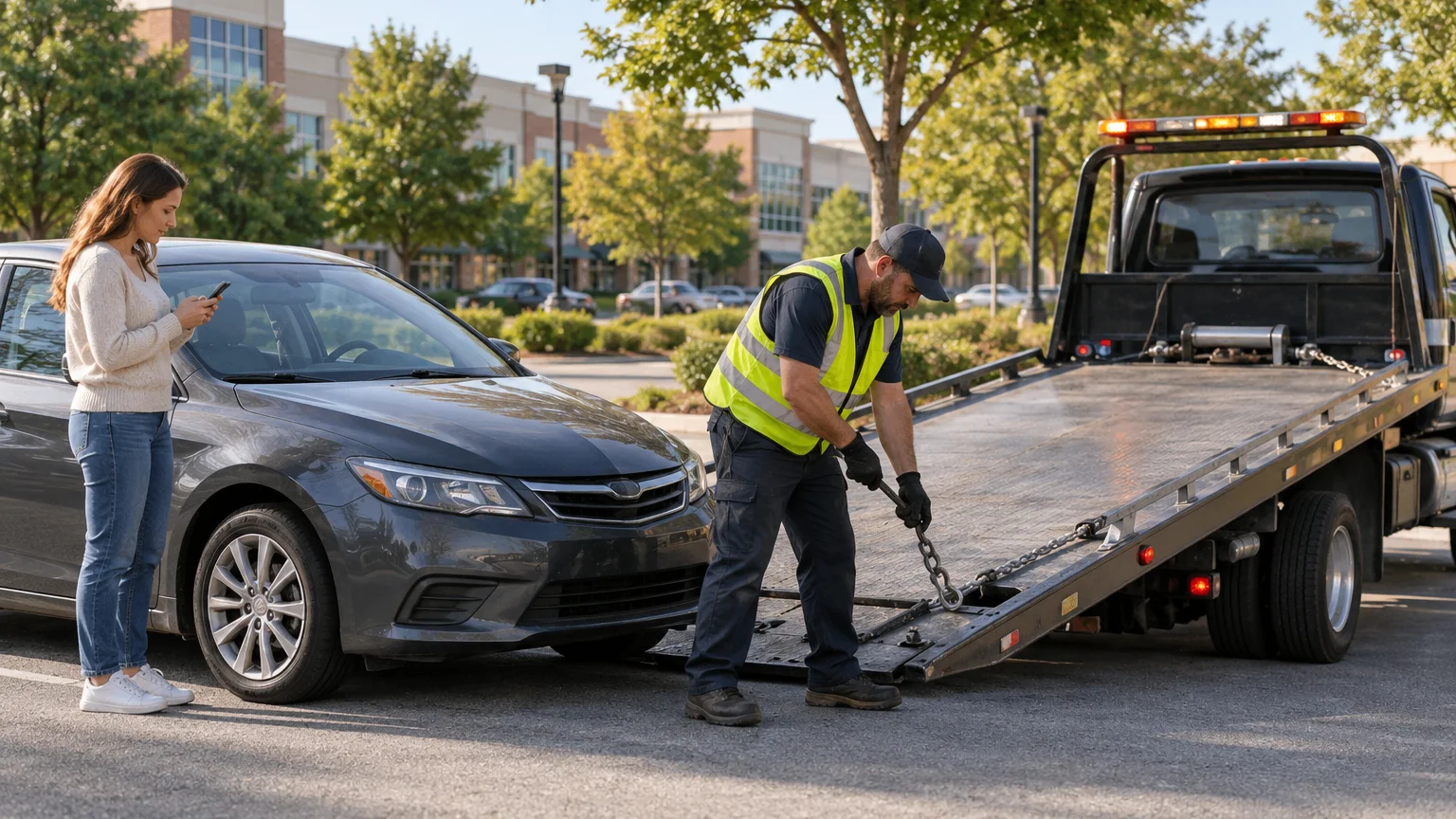
Long distance towing Short Pump VA starts with one decision: where should the disabled vehicle go? Give the referral line a complete destination, describe the vehicle’s condition, and confirm the full charge before an independent operator leaves.
A nearby repair shop isn’t always the right answer. You may need the car taken home, delivered to a trusted mechanic, or moved beyond Henrico. That changes the route, destination access, and handoff plan.
Decide where the vehicle needs to go
Choose the destination before requesting long-distance towing. A city name alone doesn’t give an operator enough detail. Have the full street address ready, along with the destination’s name and contact person.
Start by deciding whether the car belongs at a repair shop or home. A shop may be better when repairs can begin there. Home may make sense when the shop is closed or hasn’t accepted the vehicle. Our guide to choosing between a nearby shop and your home can help you sort out that decision.
Call the destination before arranging the tow. Confirm that someone will accept the vehicle. Ask where the operator should leave it and whether the entrance will be open. Don’t assume a shop accepts unattended vehicles or after-hours deliveries.
The destination also determines which direction the tow takes from Short Pump. A trip east toward Richmond may eventually meet the I-64 and I-95 overlap. A trip around the metro may use I-295. A westbound trip leaves the central Richmond road network behind. Those aren’t interchangeable routes.
If the destination is outside Virginia, explain that immediately. Interstate trips can require more planning than a move within the Richmond metro. Read our guide to arranging a tow across state lines before confirming the handoff.
Describe whether the vehicle rolls and steers
Tell the referral line what the car can still do. State whether it rolls, steers, shifts into neutral, and has working keys. Mention locked wheels, visible collision damage, low clearance, or loose body parts.
Don’t diagnose the failure if you aren’t certain. “The engine stopped and won’t restart” is more useful than guessing which part failed. Describe what happened, what you observed, and the car’s current position.
The operator also needs the vehicle’s basic details. Provide its year, make, model, and general vehicle type. Mention anything attached to it, including a trailer or exterior carrier. These details help the independent operator assess the request before accepting it.
Ask whether flatbed towing fits the vehicle’s condition. Don’t request a specific loading method based only on appearance. A vehicle with damaged wheels, steering trouble, unusual clearance, or manufacturer instructions may need added planning. The operator should decide what equipment matches the actual condition.
Be precise about the pickup spot. A car in a wide paved lot presents a different access problem from one inside a garage or against a curb. Say whether the vehicle is blocked by other cars, facing a wall, or sitting on soft ground.
If you’re still beside I-64, handle the roadside situation first. The separate I-64 Short Pump breakdown guide focuses on that immediate safety problem. This page focuses on planning the longer move after the pickup point is settled.
Confirm access at the destination
A successful long-distance tow needs a workable handoff. Before dispatch, confirm where the vehicle can be placed and who can authorize delivery. Share the destination contact’s name and working phone number with the operator.
Ask the receiving shop about its delivery process. Some destinations may have a specific entrance, parking area, or key procedure. Those details must come directly from the destination. If nobody there can confirm them, tell the operator that access remains uncertain.
Home delivery needs the same care. Identify the driveway or legal parking location. Explain any narrow turn, gate, steep approach, low branch, parking structure, or crowded curb. Don’t promise that a vehicle can be placed somewhere until the operator assesses access.
Keys also need a handoff plan. Decide whether they’ll travel with the operator, remain with you, or go to the receiving contact. Remove valuables and keep any documents you’ll need. If the vehicle will arrive before you, get the destination’s approval first.
For a repair shop, confirm these points:
- The shop expects the vehicle.
- The delivery address is correct.
- Someone can receive the keys.
- The operator knows the approved drop location.
- The shop has your contact information.
A destination problem is harder to solve after a long trip. Clear instructions reduce uncertainty at the end of the run. If access can’t be confirmed, discuss an alternate destination before the operator starts moving the car.
Ask how the complete charge is calculated
Ask the independent operator for the complete charge before agreeing. The brand makes referrals and doesn’t set the operator’s total. The operator contracts with and bills you directly.
For an out-of-town tow from Short Pump, ask what the quoted amount includes. Confirm how mileage is measured and whether loading, special equipment, tolls, destination delays, or after-hours conditions affect the total. These aren’t promises that a particular fee applies. They’re questions to settle before dispatch.
Give both complete addresses. A quote based on “somewhere near Richmond” or “a shop west of town” can’t reflect the actual request. Tell the operator if the destination may change, because a different endpoint changes the trip.
Ask for the amount in writing when the operator can provide it. Keep the operator’s name and contact details. If the vehicle’s condition or destination changes, request an updated total before authorizing new work.
Don’t confuse a requested long-distance tow with a nonconsensual private-property tow. Virginia’s statutory towing ceilings concern passenger vehicles removed from private property without the owner’s consent. They aren’t a quoted price for transportation you request. The Code of Virginia towing chapter provides the legal context for those regulated removals.
If insurance or roadside coverage may apply, call the insurer directly. Towing coverage is an optional policy matter in Virginia. Confirm the destination, mileage allowance, reimbursement process, and required paperwork with the company that issued your policy.
Confirm the route before dispatch: long distance towing Short Pump VA
Review the route with the operator before the vehicle moves. Confirm the pickup address, final address, preferred destination contact, and any known access limits. If either location changes, say so before dispatch.
A route from Short Pump can head toward central Richmond, connect with I-295, or continue west on I-64. The best path depends on the destination and current conditions. Don’t assume the route based only on distance.
Check 511 Virginia for current incidents and road conditions. A closure or major delay may change the practical route. The independent operator makes the final driving decision based on the vehicle, equipment, destination, and roadway conditions.
Keep the destination contact available during the trip. If the shop closes, a gate locks, or the approved drop area changes, tell the operator promptly. Don’t redirect the vehicle to a new city without first confirming how that affects the arrangement.
Before dispatch, repeat the essential details:
- Exact pickup and destination addresses
- Vehicle year, make, model, and condition
- Whether the vehicle rolls, steers, and shifts
- Keys and destination handoff instructions
- Access limits at both locations
- The complete charge and what it includes
That short review catches many avoidable misunderstandings. It also keeps the request centered on the destination, not merely getting the car away from Short Pump.
When to call us
Call when a disabled vehicle must travel beyond Henrico and the destination, access, or loading needs require a licensed towing operator. Quick Tow Richmond takes recorded calls 24/7 and refers requests to independent licensed operators. Call us at (804) 701-6752.