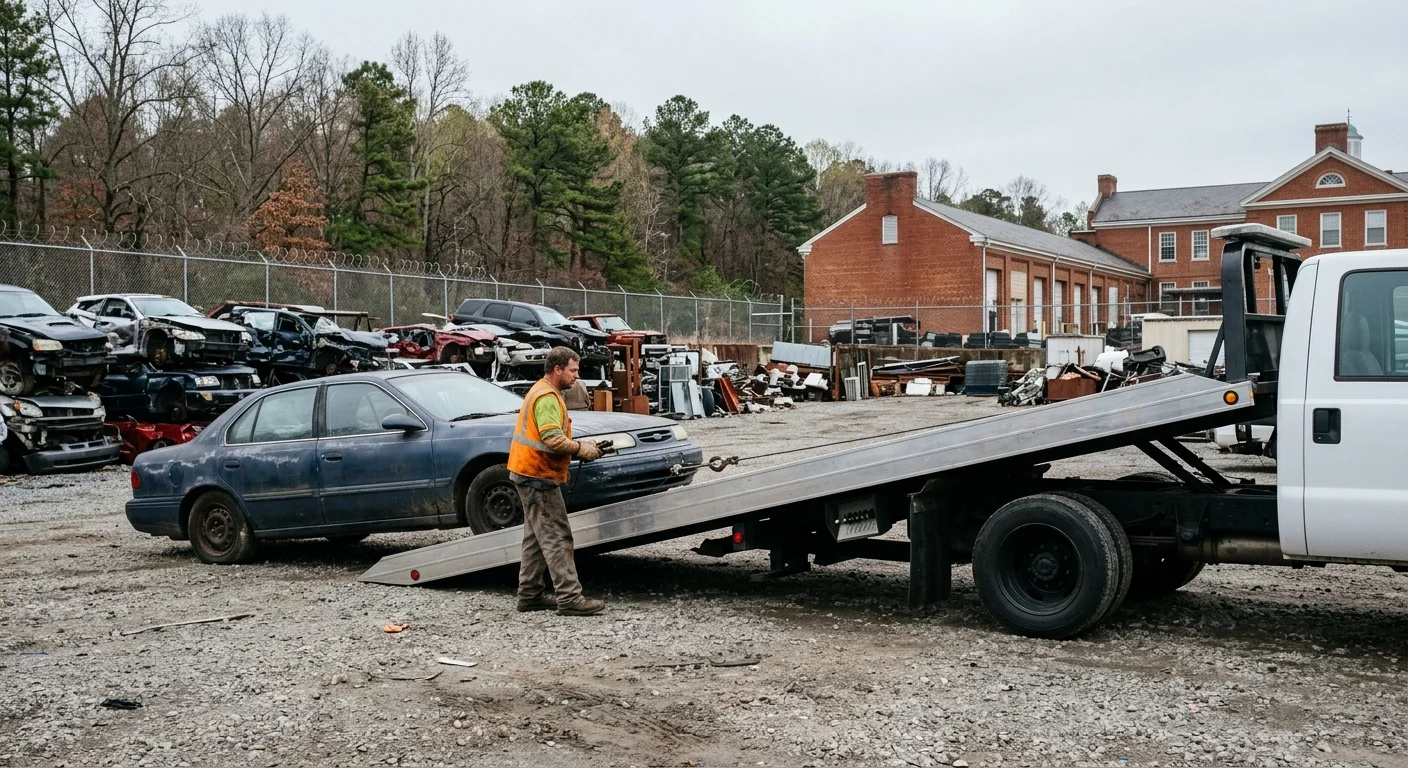
The direct answer to how to junk a car in Virginia is simple. Sign the title over to a licensed demolisher or scrap metal processor, or complete Vehicle Removal Certificate Form VSA 40. Then surrender the plates and report the transfer to Virginia DMV.
How to junk a car in Virginia with Form VSA 40
Virginia DMV calls the Vehicle Removal Certificate, Form VSA 40, its standard form for most vehicle transfers to demolishers or scrap metal processors. It provides a documented path when a vehicle is being transferred for destruction.
Virginia law defines a Vehicle Removal Certificate as a transferable DMV document. It authorizes the removal and destruction of an abandoned motor vehicle. DMV also uses VSA 40 for private owners voluntarily junking vehicles.
The other standard path is signing the Virginia title directly to the recipient. Which document fits depends on the vehicle and the receiving business. Before arranging transportation, ask the demolisher or processor what it needs from you. You can also confirm the current form and submission instructions through the Virginia DMV’s vehicle disposition FAQ.
This process applies whether the car sits behind a Southside home, beside a Chesterfield driveway, or on private property in Henrico. The location may affect transportation, but it doesn’t change the confirmed document names.
A car removed through an impound process needs different attention first. If your vehicle disappeared from a Richmond street, start with our guide to finding a towed car in Richmond. Confirm where it is before planning its final disposition.
Form VSA 40 handles the transfer paperwork. It doesn’t set a towing price or promise that a particular business will accept the car. Confirm both points with the receiving business and any operator moving it.
Signing the title over to a licensed demolisher or scrap processor
If you have the title, Virginia’s standard path allows you to sign it over to a licensed demolisher or scrap metal processor. Confirm how the receiving business wants the title completed before signing. That avoids creating an unclear transfer document.
Don’t assume a verbal agreement completes your DMV responsibilities. Virginia DMV says owners have a separate duty to report when a vehicle is sold or transferred. Its “Report a Vehicle Sold or Traded” tool is provided for that purpose.
DMV states that the notice is required by law, but it doesn’t publish a numbered deadline for it. Report the transfer promptly and check DMV’s current instructions instead of relying on an unofficial deadline.
Transportation is a separate part of the job. A weathered sedan near Midlothian Turnpike may not steer, brake, or roll well enough for an ordinary move. Our junk car removal service guide explains how Quick Tow Richmond connects owners with independent licensed operators.
The operator contracts with you and bills you directly. Quick Tow Richmond doesn’t operate the tow truck or set the operator’s total price. Ask for the full transportation total, including mileage, before agreeing.
Some non-running vehicles may need equipment that keeps the entire vehicle off the road. You can read about that option on our flatbed towing page. Describe the car’s condition and location accurately when leaving your message.
What the yard has to do after it takes the car
Virginia law gives the demolisher or processor its own paperwork duties. Under Va. Code § 46.2-1206, the business isn’t required to obtain a title in its own name before processing the vehicle.
After the vehicle is demolished or changed so it’s physically no longer a motor vehicle, the processor must send the disposition paperwork to DMV for cancellation. That paperwork may be the title, Vehicle Removal Certificate, disposition history, or a foreign sales receipt.
The processor must report the disposition within five working days of demolition. That clock runs from demolition, not from the day the owner first calls or the day the vehicle reaches the property. It also isn’t the owner’s deadline for reporting a sale or transfer.
The business must keep its disposition records in a permanent ledger at its location for five years. When DMV has no title on file, the processor runs a DMV record search. The approved Virginia source lists that search at $25.
Virginia also attaches consequences to those recordkeeping requirements. A first violation is a Class 3 misdemeanor and can bring a civil penalty up to $500. A later violation is a Class 1 misdemeanor and can bring a civil penalty up to $1,000.
Those are obligations placed on the processor. They aren’t added prices that Quick Tow Richmond charges an owner. For the governing vehicle-removal statutes, review the Code of Virginia, Title 46.2, Chapter 12.
Before releasing the car, ask the recipient which document it will use. Keep your own transfer records where you can find them later.
Surrender the plates and confirm insurance timing
Virginia plates belong to the owner, not the vehicle. When a vehicle is sold, junked, or no longer operated, DMV directs the owner to surrender the plates immediately.
You can surrender them online, in person, or by mail. Mail surrender uses Form FMS 210. Remove the plates before the vehicle leaves your control unless DMV gives you different instructions for your situation.
A partial registration refund may apply when at least six months remain. That possibility applies only when the plates are surrendered in person or by mail, not online. Eligibility and current submission details should be confirmed with DMV.
Plate surrender and transfer reporting are separate actions. Complete the owner’s vehicle-transfer notice even when the demolisher handles the destruction paperwork. Don’t substitute the processor’s five-working-day reporting duty for your own DMV notice.
Virginia doesn’t publish one statewide sequence for canceling insurance around every junk-car transfer. Contact your insurer and DMV before ending coverage. Tell them the vehicle is being transferred for destruction, and ask what must be completed first in your case.
That check matters whether the car is parked in Petersburg, Colonial Heights, Southside, Henrico, or Chesterfield. The DMV paperwork remains a state process, while your insurance question belongs to your individual policy.
If the title is gone
A missing title doesn’t mean you should guess at the owner information or sign an unofficial document. Virginia DMV provides Form VSA 67 for a replacement title.
The registered owner may apply online or in person. For an in-person application, DMV identifies the registration card and a driver’s license as the required supporting items. If several owners appear on the title, only one needs to apply.
Once DMV issues a substitute title, every earlier title becomes void. If an old copy later turns up in a desk, glove box, or storage bin, don’t use it for the transfer.
No replacement-title fee or processing time is stated here, because neither could be confirmed. Check DMV’s current VSA 67 instructions rather than relying on an estimate. If the car must leave a Tri-Cities property soon, tell the receiving business that the title is missing before arranging transportation.
Form VSA 40 may be part of the standard transfer path to a demolisher or scrap processor. Still, confirm which document the specific recipient will accept. Don’t assume that a transportation operator can decide the receiving business’s paperwork rules.
You’ll also want the owner name and vehicle records to agree before the handoff. If something doesn’t match, pause and ask DMV what correction is required. That’s safer than creating a transfer record that the processor can’t use.
Salvage is a different track from junk
Junking covers a vehicle being transferred for demolition or scrap processing. Virginia’s salvage process is a separate path for damaged vehicles.
For an uninsured or self-insured “late model” vehicle, the owner uses Form VSA 56 when repair costs exceed 75% of the vehicle’s actual cash value. The application requires the original title and a $15 titling fee. Sales and use tax may also apply.
The application goes by mail to DMV’s Vehicle Branding Work Center. Virginia DMV customer service centers can’t process it. The resulting document is branded “IF REBUILT.”
A vehicle with that active salvage certificate can’t be driven or registered unless it’s reassigned to a licensed rebuilder. That is different from transferring an unwanted car to a demolisher for destruction.
Insurance companies have a separate duty when they pay a total-loss claim at the same threshold. The insurer must file Form VSA 56 within 15 days of paying the owner or lienholder. It also files Form VSA 58 when a late-model vehicle remains with the owner.
Don’t treat every old, damaged, or non-running vehicle as salvage. Virginia’s definition of “late model” isn’t spelled out here, and DMV, not a guide like this one, decides how a specific car gets classified. Ask DMV which track applies before mailing paperwork or transferring the vehicle.
The distinction affects the car’s future. Junk paperwork leads toward destruction and DMV cancellation. Salvage paperwork covers a damaged vehicle that may later move through the licensed rebuilding process.
When to call us
Call when the vehicle can’t move safely under its own power or needs transport to the receiving business. Quick Tow Richmond matches callers with independent licensed tow operators, who contract with and bill the driver directly. The recorded line takes calls 24/7 and plays a recording notice before taking your message: Call us at (804) 701-6752.