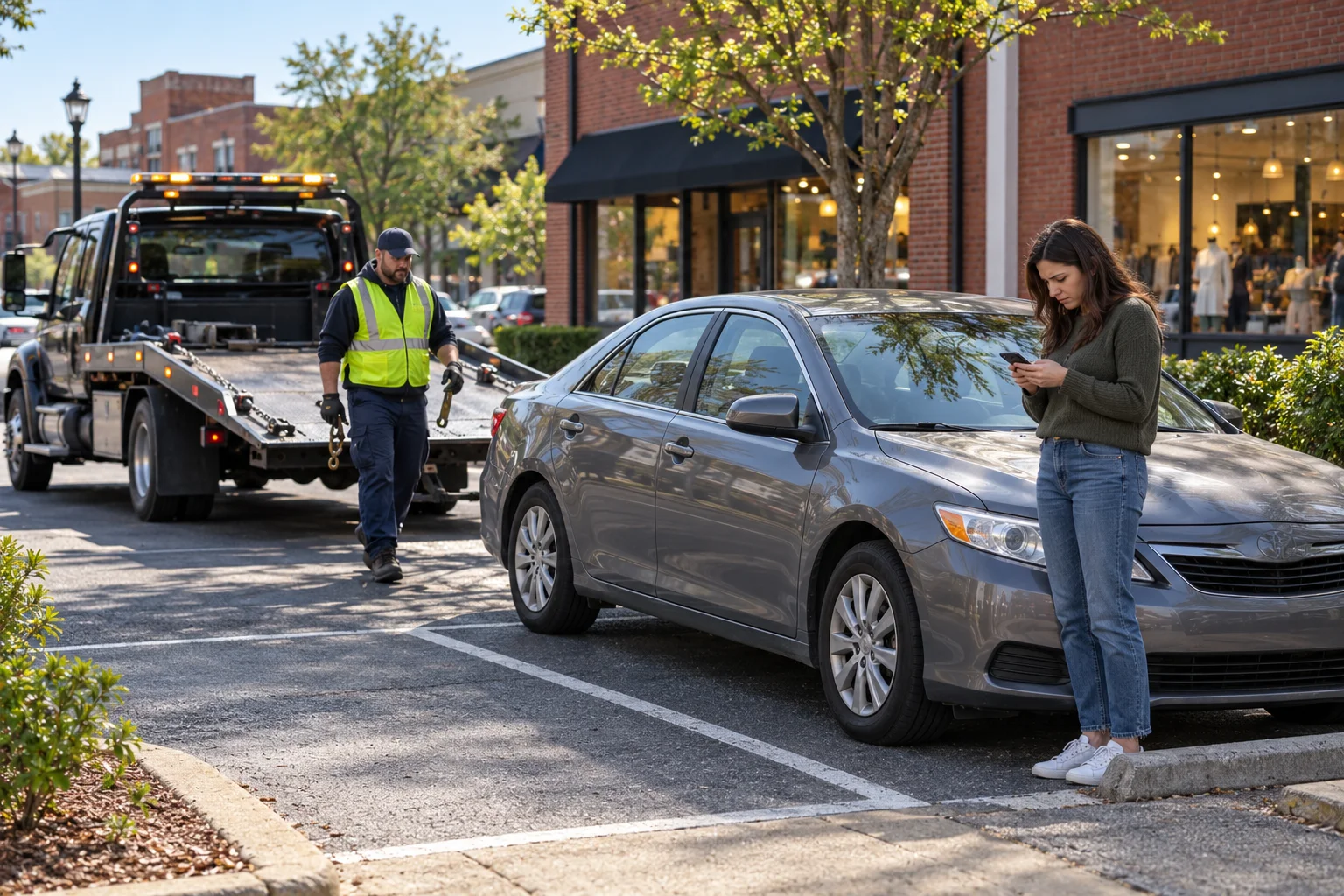
If you need a cary tow truck for a disabled car in Carytown, start with the exact parking position. Describe the entrance, surrounding vehicles, wheel condition, and destination before an operator is sent. Those details help the independent operator assess the pickup before reaching the lot.
Tell the cary tow truck operator exactly where the car sits
A Carytown address may identify the building without identifying the car. A disabled vehicle could be curbside, behind a storefront, or inside a small surface lot. Give the exact address first, then explain where the vehicle sits relative to that address.
Share the storefront or property name if one is visible. Add the nearest cross street when you know it. If the lot has several entrances, identify the one closest to the car. Mention whether the entrance comes from the street or an adjoining lot.
The vehicle’s position matters too. Say whether it’s nose-in, backed into the space, or parallel parked. If it’s along a curb, report which side of the street it occupies. Describe anything blocking direct access, including parked vehicles, a wall, a fence, posts, or another fixed object.
Don’t assume a map pin shows the right entrance. Drop the pin directly on the vehicle when possible. You can also send a photo showing the car and the approach from the lot entrance. Avoid sending only a close photo of the damaged or disabled area. That image won’t show the space an operator needs to evaluate.
Quick Tow Richmond is a referral service. We take the request through a recorded line and match it with an independent licensed operator. The operator contracts with you directly and handles the towing work.
Describe the working space around the vehicle
A clear description of the parking space is more useful than calling it “tight.” Explain what surrounds each side of the car. Include the space in front, behind, and beside it.
Report whether neighboring spaces are occupied. Note fixed objects that won’t move before pickup. These might include curbs, posts, walls, fences, planters, gates, or loading-area barriers. If another driver may leave soon, don’t treat that space as guaranteed access.
The lot entrance deserves its own description. Tell the operator about gates, sharp approaches, overhead structures, or parked cars near the opening. Don’t estimate measurements unless you’ve actually measured them. A photo from the entrance often provides better context than a guessed clearance.
Also mention current activity around the vehicle. A delivery, line of waiting cars, or blocked aisle may change access by the time the operator arrives. Share any access instructions given by the property manager. If the vehicle is on private property, confirm that you’re authorized to have it moved.
Our guide to wheel-lift towing explains that service option. The article about a wheel lift in a tight parking lot offers more questions to consider before dispatch. Those pages can help you describe the situation, but the responding operator still decides what equipment fits the actual pickup.
Explain whether the wheels roll and steer
Tell the operator what happened before the car stopped. Then describe what the vehicle can do now. Don’t force the car to move just to test it.
Start with the steering. Say whether the steering wheel turns and whether the front wheels appear to follow it. Mention if the steering is locked or the key isn’t available. If you can’t confirm the condition, say that plainly.
Next, report whether the vehicle can shift into neutral. Explain whether any wheel appears locked, flat, damaged, or turned against a curb. If the parking brake won’t release, include that detail. Don’t diagnose the cause unless a qualified person has already confirmed it.
Tell the operator about visible body damage near the wheels. A loose panel, damaged bumper, or low-hanging part may affect the assessment. Photos should show the whole vehicle from several angles, not only the problem area.
Also share the vehicle’s year, make, model, and drive type if known. If you don’t know the drive type, don’t guess. The operator can assess the vehicle using the information you can confirm.
These details help distinguish a routine pickup from a car needing closer planning. They also reduce surprises after the operator reaches a crowded Carytown lot. For a broader comparison, read our guide to wheel-lift or flatbed towing.
Let the operator choose the towing setup
Requesting a specific truck based only on a photo can create confusion. Describe the vehicle and space, then let the independent operator assess the equipment needed. The operator owns the towing decision and performs the work.
A wheel-lift request may sound natural for a tight lot. However, vehicle condition, wheel position, access, and destination all belong in that assessment. The same applies when someone requests a flatbed without describing the parking space.
If you have concerns about vehicle clearance, state them directly. Mention modifications, visible damage, locked wheels, missing keys, or anything hanging beneath the vehicle. Don’t ask for a damage guarantee. Instead, ask the operator to explain the planned loading approach before work begins.
Our flatbed towing service page gives you another service option to discuss. It doesn’t replace an on-site assessment. The operator may need to see the car, surrounding vehicles, and available approach before confirming the setup.
Keep access details current while waiting. If another vehicle parks beside the disabled car, update the operator. Do the same if a gate closes or a delivery blocks the entrance. A changed lot can require a new assessment.
Quick Tow Richmond doesn’t own towing equipment or perform the tow. We connect callers with independent licensed operators. The operator selects the equipment, contracts with the driver, and bills the driver directly.
Confirm the destination and complete charge
Choose the destination before dispatch when you can. Provide its full address, not only a shop name. Confirm that the destination can receive the vehicle when it arrives. If you’re taking the car home, describe the final parking location and its access.
Ask the operator for the complete expected charge before agreeing. The request should include the pickup, destination, mileage, vehicle condition, and access limitations. Ask whether the stated total includes the full trip and any work required by the car’s condition.
Quick Tow Richmond doesn’t set the operator’s price. The independent operator contracts with you and bills you directly. Don’t rely on a hookup figure alone when comparing options. Confirm the complete charge with mileage included.
Virginia’s towing laws distinguish several towing situations, including driver-requested service and nonconsensual removal from private property. The state’s rules appear in Title 46.2, Chapter 12 of the Code of Virginia. Legal ceilings for a nonconsensual private-property hookup aren’t quotes for a tow you request.
Before the vehicle moves, confirm where the keys will go. Decide whether you’ll meet the operator at the destination. Share the destination contact’s instructions when someone else will receive the car.
Keep your phone available for questions about access or the vehicle. If the situation changes, report the change clearly. A newly blocked entrance, locked gate, or unavailable destination can affect the job.
When to call us
A disabled car boxed into a Carytown lot needs a licensed towing professional when it can’t leave normally. Quick Tow Richmond’s recorded line takes calls anytime and refers requests to independent licensed operators. Call us at (804) 701-6752.