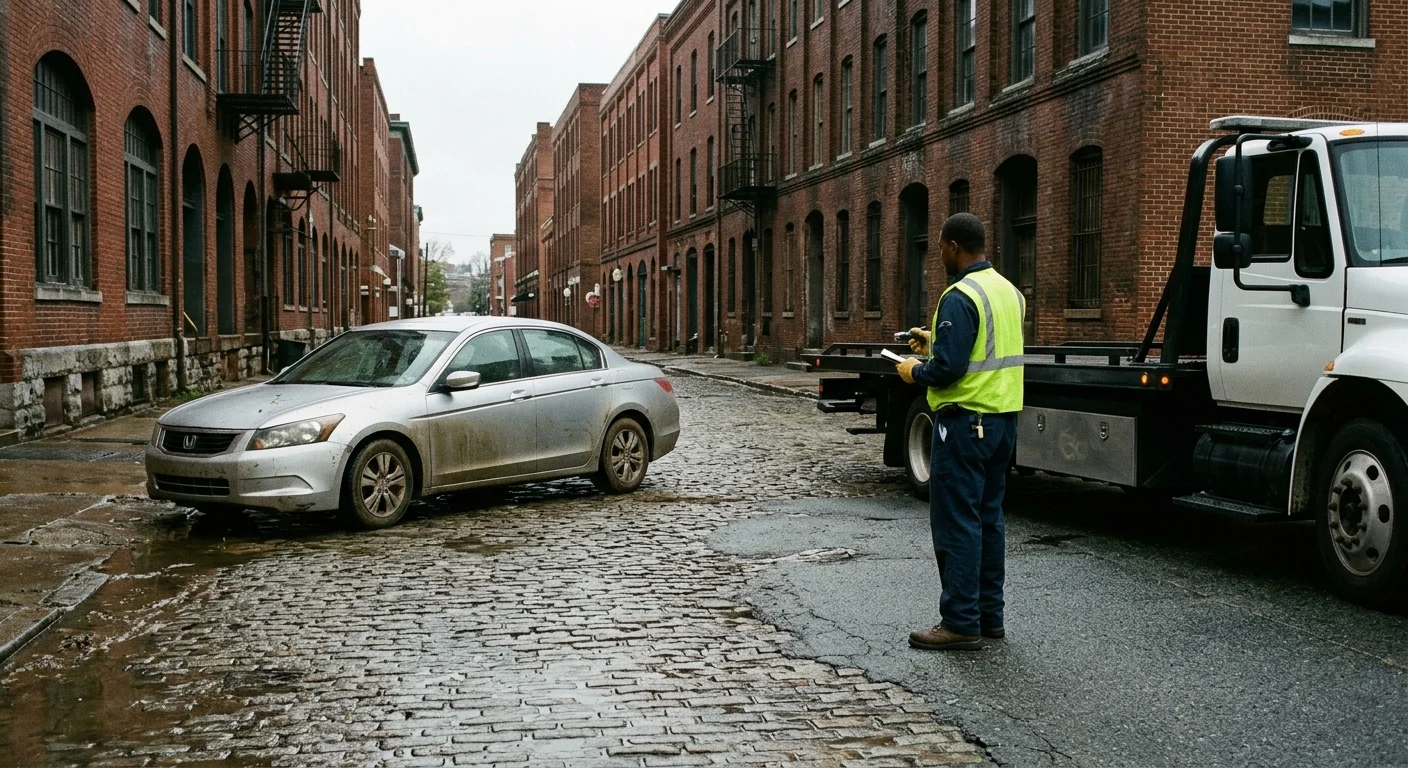
For flooded car towing Richmond help after a Shockoe Bottom stall, stay out of moving water and follow all closure or responder directions. Don’t restart, push, or enter the car while access remains uncertain. Once the street is cleared, tell the towing operator where the water reached, whether the car can roll and steer, and where it needs to go.
Put personal safety before moving the car
A stalled car can wait. Your safety can’t. Move away from the water if you can do so without crossing it. Follow directions from police, firefighters, or other responders already controlling the area. If someone is hurt or faces an immediate threat, call 911 before arranging a tow.
Don’t walk past barriers, move cones, or return for belongings while the street remains closed. A towing operator also needs authorized access before assessing the car. Calling early can start the conversation, but it doesn’t make a closed street available.
There’s no verified universal water-depth rule in the approved Richmond sources for deciding when it’s safe to approach a flooded vehicle. Water movement, street conditions, and the vehicle itself can change the situation. Let the responding authority decide when the area is open. Check the vehicle manufacturer’s guidance before making any decision about starting or moving the car.
Shockoe Bottom deserves extra caution. Its low elevation beside the James River and Shockoe Creek makes it Richmond’s most flood-prone commercial district. Flash flooding has repeatedly stranded vehicles there. That history doesn’t tell you whether one block is safe today. Current barriers and responder instructions do.
When you call, say whether you’re with the car or already somewhere safe. Explain whether active water separates the operator from the vehicle. That lets the operator assess whether the job can be considered now or must wait for access.
Report where the water reached
Describe the highest visible water mark without returning to an unsafe area. Use parts of the car as reference points, such as the tire, wheel, bumper, door, or seat. Don’t invent an inch measurement if you didn’t take one.
Tell the operator whether you saw water inside the passenger area. Mention any visible mud line, debris around the wheels, or objects blocking the approach. If you took photos from a safe location, ask whether the operator can review them. A clear photo may show details that are difficult to explain during a stressful call.
Give the car’s make, model, color, and plate information. Share the closest reliable location description and which side of the street holds the car. If responders moved you away from the scene, explain where you’re waiting. Don’t return merely to confirm a minor detail.
Shockoe Bottom access can differ from nearby parts of downtown because of its position beside the river and creek. Saying only “downtown Richmond” isn’t specific enough. Name Shockoe Bottom and provide the nearest location you can confirm from your map, parking record, or visible surroundings.
Also separate what you saw from what you’re assuming. “The water reached the lower door” helps. “The engine is ruined” is a diagnosis that hasn’t been confirmed. The towing operator needs observed conditions first. A repair professional can handle the mechanical diagnosis after transport.
Explain whether the vehicle can roll and steer
Tell the operator what you already know about the wheels and steering. Don’t enter the car or test controls while the area remains restricted. Once access is allowed, the operator can decide what additional checks are appropriate.
Mention whether the keys are available and whether a wheel appears turned, blocked, or damaged. Say if the vehicle sits against a curb, outside the normal travel surface, or at an unusual angle. These details help distinguish a basic loading job from a recovery that needs another approach.
Ask whether flatbed towing fits the vehicle and its condition. Don’t assume a flatbed can reach every flooded street or loading position. The independent operator makes that decision after reviewing access, wheel movement, clearance, and manufacturer instructions.
If the car isn’t sitting normally on the roadway, describe that before dispatch. Accident recovery and winch-out service may be the better conversation when a vehicle must be repositioned before loading. Our guide to choosing a tow or winch-out after leaving the road explains the practical difference.
Vehicle-specific towing instructions matter too. Tell the operator if you know the drivetrain or have the owner’s manual available. If you’re unsure about neutral, transport mode, or another setting, say so. Check the manufacturer’s instructions instead of guessing. The operator can then plan around confirmed information rather than an assumption made beside the road.
How street access changes after water recedes
Lower water doesn’t cancel a road closure. Wait until the responding authority releases the area, and don’t treat another driver’s movement as permission to enter. The operator may need to approach from a different direction than you used before the flooding.
Update the towing operator when conditions change. Report remaining standing water, visible debris, blocked lanes, parked vehicles, or barriers. Explain whether there’s dry pavement beside the car and enough visible space for an approach. The operator will decide whether those conditions support the proposed loading plan.
For conditions on state-maintained routes, check 511 Virginia for current traffic and incident information. That resource is especially useful when closures affect I-95, I-64, or I-295 around Richmond. City-street access in Shockoe Bottom still depends on the restrictions posted at the scene.
VDOT’s Safety Service Patrol covers Richmond-area portions of I-95, I-64, and I-295. The service provides free roadside assistance and incident management, but it isn’t a towing company. It can help secure an interstate incident and assist a driver with arranging a tow.
If your trip shifts from Shockoe Bottom to the interstate, conditions change quickly around the downtown I-95 and I-64 overlap. Read our guide for a breakdown on I-95 in Richmond before handling that separate roadside situation.
Confirm the loading plan and destination for flooded car towing Richmond
Give the operator both ends of the trip before agreeing to service. Confirm the exact pickup point and the intended destination. That destination might be a repair shop, your home, or another location that has agreed to receive the vehicle.
Ask whether the operator expects a direct load or preliminary recovery work. Mention anything that could affect access, including a tight entrance, parking structure, locked gate, steep approach, or restricted drop-off area. Confirm that the destination will be open and able to accept the car when it arrives.
Ask for the full expected total with mileage included before agreeing. The brand doesn’t set an independent operator’s total price. The operator contracts with you and bills you directly. Make sure the quote accounts for the pickup conditions, loading plan, travel distance, and destination access.
Don’t choose a destination based only on convenience. A vehicle that stalled in floodwater may need guidance from its manufacturer, insurer, or a repair professional. Quick Tow Richmond doesn’t diagnose the car. Our role is connecting callers with independent towing operators for the requested transport or recovery.
Before ending the call, repeat the vehicle description, location, destination, and known access limits. Correct any detail that changed while you waited. Keep the operator informed if responders close the street again or move the vehicle. Accurate updates are more useful than guessing when the route will reopen.
Frequently asked questions
Should I try starting the car after the water drops?
Don’t make that decision from a general internet rule. The approved Richmond sources don’t establish a universal restart threshold for a flooded vehicle. Follow any responder directions and consult the vehicle manufacturer or a repair professional about your specific car.
What if I don’t know whether the wheels will roll?
Say that plainly. Tell the operator what you observed before leaving the vehicle, including its position and visible wheel condition. Don’t return through water or cross a closure just to test it. The operator can account for unknown wheel movement while discussing the loading plan.
Does every flooded car need a flatbed?
There isn’t one confirmed loading method for every flooded vehicle. Vehicle design, wheel position, street access, and manufacturer instructions all affect the decision. Describe the scene and ask the independent operator what equipment fits those conditions.
What should I do while the street remains closed?
Wait somewhere outside the restricted area and follow the responding authority’s directions. Tell the operator that access hasn’t been released. Update the operator when the closure changes, but don’t promise a pickup route or reopening time you can’t confirm.
When to call us
Call once the street is accessible and a licensed towing pro needs to assess loading, recovery, or transport. Quick Tow Richmond’s recorded line takes calls 24/7, plays a recording notice, and connects callers with independent operators who contract with and bill drivers directly. Call us at (804) 701-6752.