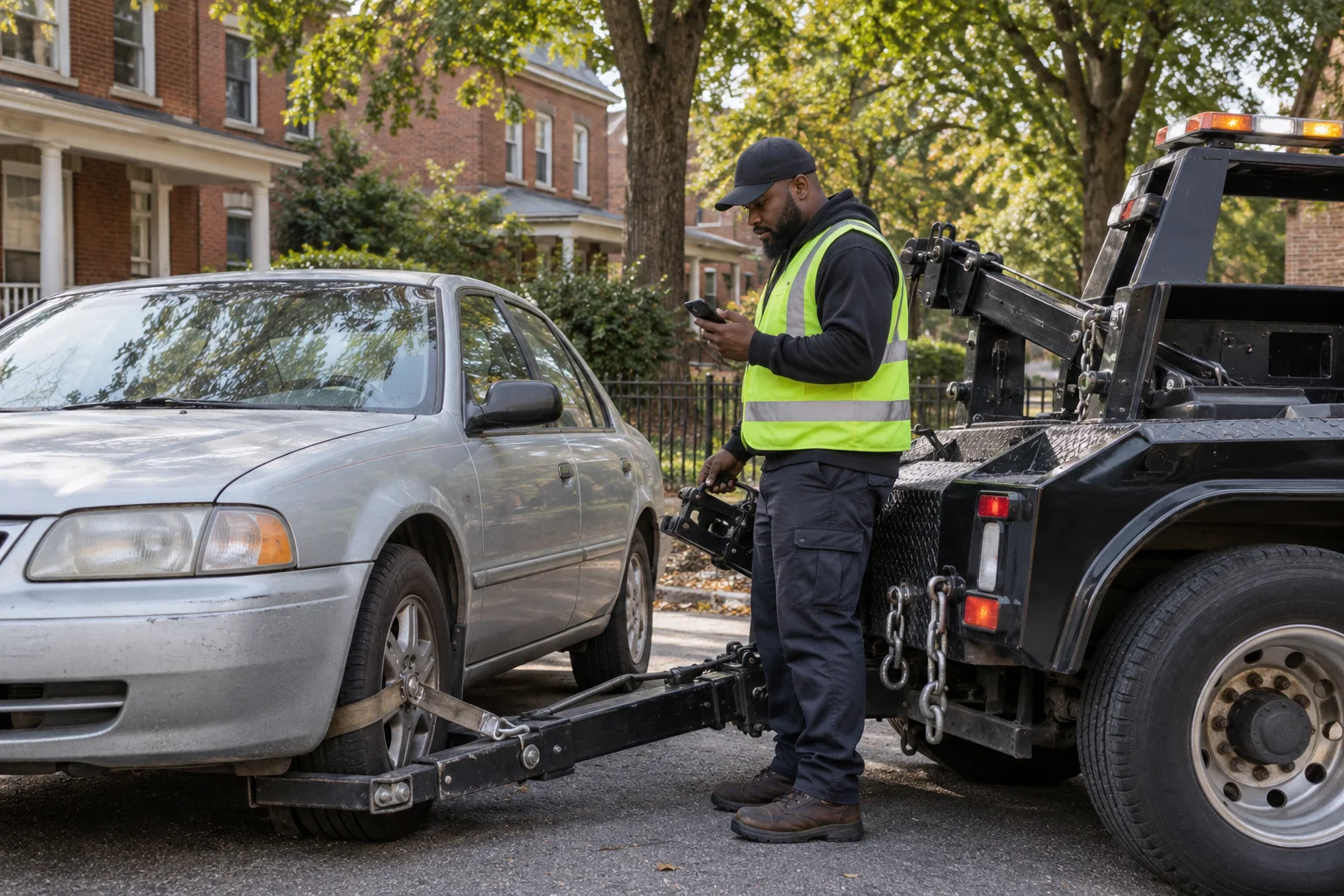
Searching for junk cars for cash Richmond VA brings up offers that may look similar. Before accepting one, confirm the buyer, payment terms, paperwork, and complete removal arrangement. No reliable local payout figure was confirmed, so compare written offers instead of trusting an advertised maximum.
Quick Tow Richmond can refer a removal request to an independent operator. We don’t buy vehicles or set the operator’s final offer. The buyer or operator should explain every term before you agree.
Confirm who owns the vehicle when comparing junk cars for cash Richmond VA
Start with the name shown on the Virginia title. Compare it with the person offering the vehicle. If the names differ, don’t assume a buyer can complete the transfer. Ask what proof they’ll require and who must sign.
A lien, shared ownership, or missing title can change the process. Tell the buyer about those issues before discussing pickup. Don’t sign a blank document or leave an ownership question for the driver to resolve at the curb.
Virginia’s standard path lets an owner sign the title over to a licensed demolisher or scrap metal processor. Another path uses a Vehicle Removal Certificate, Form VSA 40. The Virginia DMV Vehicle Disposition FAQ explains the state’s disposition process.
A lost title needs separate attention. Virginia owners can apply for a replacement using Form VSA 67. A substitute title voids earlier titles. Our Virginia junk-car paperwork guide covers that process in more detail.
Keep this first conversation focused. Give the buyer the name on the title and describe any lien or co-owner. Then ask the buyer to identify the exact document it expects. If that request isn’t clear, pause before scheduling removal.
Quick Tow Richmond can help route a junk-car removal request. The independent buyer or operator still decides whether it can accept the vehicle and which ownership records it needs.
Describe whether the car can roll and steer
A buyer needs an accurate picture of the vehicle’s movement. Start with simple facts. Say whether it rolls, steers, starts, and shifts into neutral. Mention locked wheels, missing keys, collision damage, or tires that won’t hold air.
Don’t describe a vehicle as accessible just because it’s visible. A sedan parked beside a Richmond home may sit behind another car. An apartment vehicle may face a curb or occupy a tight corner. A car in a garage can have limited overhead clearance.
Location also matters across the Richmond metro. Say whether the car is in the City of Richmond, Henrico, or Chesterfield. Include the street location and where it sits on the property. Don’t use “Richmond” as shorthand when the actual pickup is outside the city.
Send current photos if the buyer accepts them. Show every side, each wheel, and the path leading to the vehicle. Keep plates, personal documents, and unrelated people out of the frame when possible. Photos shouldn’t replace a clear written condition report.
A vehicle with four flat tires may need different loading equipment than a rolling car. Our guide to removing a junk car with four flat tires explains what to disclose before pickup.
Ask whether the reported condition changes the written offer or removal terms. If it does, request the revised terms before scheduling. Accurate details reduce the chance of a disagreement after the operator reaches the vehicle.
Ask how the offer and removal are handled
An offer should identify what’s included. Ask whether the stated amount already accounts for the vehicle’s condition, location, and loading needs. Confirm whether towing or transport affects the amount you receive.
No verified Richmond minimum payout or average junk-car value was found. That means a specific cash figure can’t be promised here. The independent buyer sets its offer, while the dispatched operator contracts with and bills the customer directly when towing charges apply.
Quick Tow Richmond doesn’t purchase the vehicle. We also don’t control the buyer’s valuation or the operator’s final charge. Our role is to take the request and connect the caller with an independent operator.
Ask who will arrive and whether that party is the buyer, a towing operator, or another carrier. Get the business name before pickup. Confirm who becomes responsible for the vehicle after the documents are signed.
Equipment should match the condition you described. A vehicle with locked wheels, severe damage, or limited clearance may need flatbed towing. Don’t choose equipment yourself. Explain the condition and let the operator determine the appropriate method.
The pickup location can affect planning. A vehicle near the I-95 and I-64 overlap has different access concerns than one sitting in a Henrico driveway or a Chesterfield lot. Give the exact location, entry instructions, and any property restrictions.
Before agreeing, ask for the complete transaction in plain language. The answer should separate the vehicle offer from any removal charge. If mileage changes the towing total, ask for that total with mileage included.
Check what paperwork the operator requests
Ask for a document list before anyone arrives. Don’t rely on a vague instruction to “bring the paperwork.” The buyer should identify each item and explain who needs to sign it.
Virginia confirms two standard disposition routes. The owner may assign the title to a licensed demolisher or scrap metal processor. The owner may instead complete a Vehicle Removal Certificate, Form VSA 40, when that form fits the transfer.
Don’t treat a salvage certificate as the normal paperwork for every unwanted vehicle. Virginia uses that certificate for a separate damaged-vehicle process. If the buyer mentions salvage paperwork, ask why it applies to this vehicle.
Plates remain with the owner, not the vehicle. Virginia DMV says owners must surrender them when a vehicle is sold, junked, or no longer operated. Surrender can be completed online, in person, or by mail with Form FMS 210.
The owner also has a separate duty to notify DMV after a sale or transfer. DMV provides a Report a Vehicle Sold or Traded tool. A specific deadline for that notice couldn’t be confirmed from the approved sources, so check the current DMV instructions when completing the transfer.
Ask what record you’ll receive after the handoff. It should identify the vehicle and the receiving party. Review the vehicle identification number carefully before signing anything.
Remove personal belongings before pickup. Check the trunk, console, door pockets, and under the seats. Take out toll devices, parking passes, documents, and house keys. Keep your copies of every signed form somewhere other than the vehicle.
Get every payment and pickup term in writing
A verbal amount isn’t enough for a vehicle transfer. Ask for a written offer that identifies the vehicle. It should also state the payment method, pickup location, and any condition that could change the amount.
Confirm when payment happens. Ask whether it’s made before signing, during pickup, or after another step. Don’t assume that “cash for cars” guarantees physical cash. The buyer should name the payment method clearly.
Check who may revise the offer. Ask what happens if the arriving operator sees a condition already disclosed in writing. If the buyer reserves broad rights to change the amount, decide whether you’re comfortable before arranging pickup.
The written terms should address removal charges. Ask whether loading, towing, mileage, or access costs are deducted from the offer. If a separate operator will bill you, request the complete towing total before accepting service.
Also confirm the pickup window without treating it as an arrival promise. Quick Tow Richmond doesn’t control operator arrival times. Get any scheduling commitment directly from the independent buyer or operator.
Keep screenshots, emails, and signed documents. Photograph the vehicle immediately before it leaves. Record the receiving business’s name and the identification shown on your transfer paperwork.
Don’t hand over a signed title while payment details remain unclear. Don’t let urgency replace a readable agreement. A short written record can show what both sides accepted when the vehicle left your property.
When to call us
Call when a non-running vehicle needs a licensed towing pro for safe loading and removal. Quick Tow Richmond’s recorded line takes calls around the clock and provides a recording notice. Call us at (804) 701-6752.