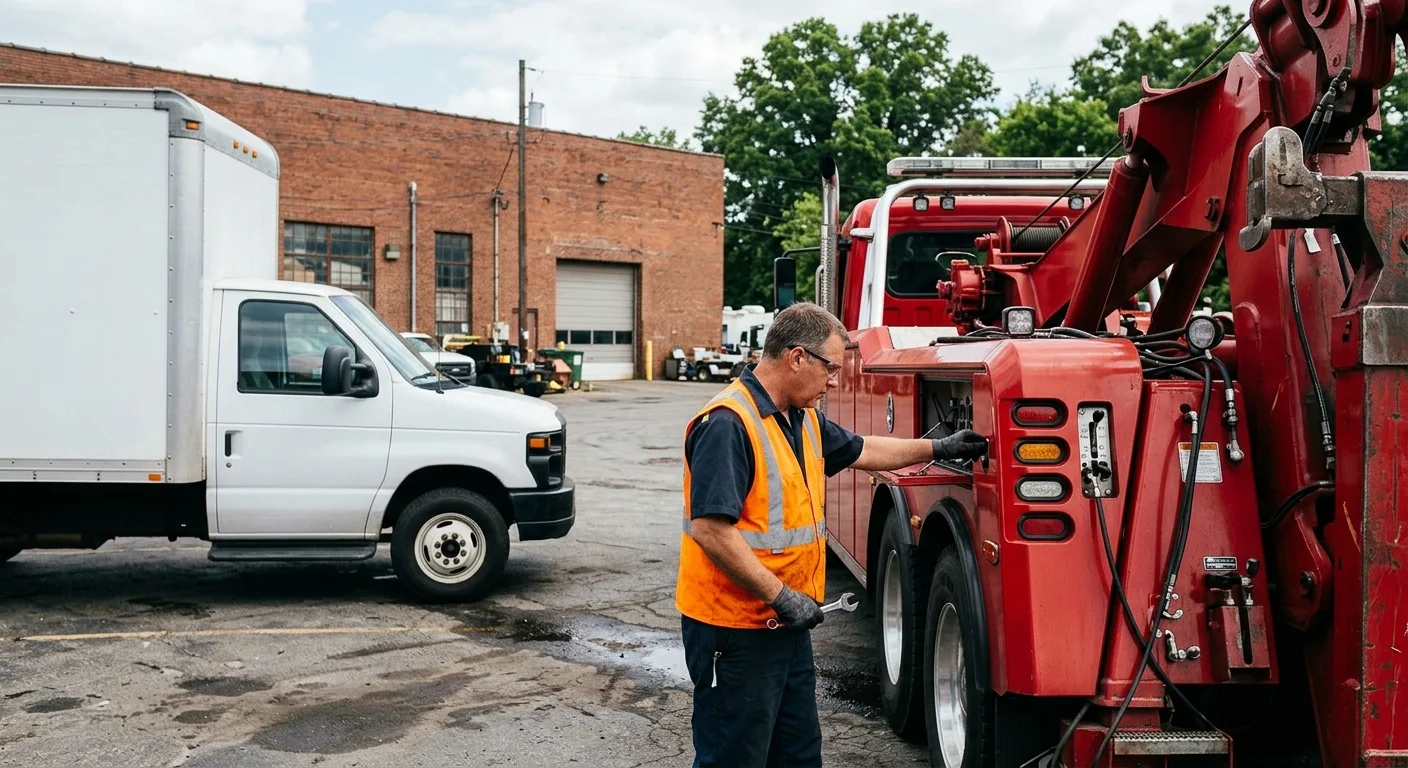
Choosing between medium-duty and heavy-duty towing starts with the vehicle’s weight, load, condition, and location. For medium duty towing midlothian, don’t choose by the vehicle name alone. Give those details to the operator so they can select suitable equipment.
Medium duty towing midlothian in plain terms
Towing classes describe different kinds of vehicles and recovery needs. They aren’t reliable labels for choosing a truck without more information.
Light-duty calls usually involve passenger cars, pickups, and small vans. Medium-duty calls often involve box trucks, larger commercial vans, RVs, and small buses. Heavy-duty calls include tractor units, loaded trailers, and full-size buses.
Those examples are starting points, not fixed rules. Two vehicles with similar bodies can have different weight ratings. One may also carry a load while the other is empty. Damage can further change the recovery plan.
A box truck stopped along Midlothian Turnpike won’t necessarily need the same equipment as a loaded trailer on the I-95 and I-64 overlap. The operator also needs room to approach, connect, and leave safely. A loading area creates a different problem from an exposed highway shoulder.
Quick Tow Richmond doesn’t own tow trucks or perform recoveries. We connect callers with independent licensed tow operators. That operator chooses the truck, contracts with the driver, and bills the driver directly.
If the vehicle is clearly commercial, describe it before requesting a dispatch. The operator can then compare its weight and condition with the available equipment. Our heavy-duty towing referral page explains how that matching process works.
How to identify the right class before calling
Start with the vehicle’s Gross Vehicle Weight Rating, commonly shown as GVWR. Read the figure directly from the vehicle’s door label when available. Don’t estimate based on appearance.
Next, explain whether the vehicle is loaded or empty. Describe the cargo if you know it, but don’t guess its weight. A dispatcher needs to know there’s a load even when the exact total isn’t available.
Then check the vehicle’s current condition from a safe position. Say whether it rolls, steers, and remains upright. Mention damaged wheels, locked brakes, disconnected components, or anything resting against the pavement. Don’t crawl under the vehicle to investigate.
Trailers need their own description. Tell the operator whether a tractor remains attached. Note whether the trailer is loaded, empty, upright, or damaged. If you can safely read its identifying information, have that ready too.
Location matters just as much. A vehicle beside Midlothian Turnpike presents different access than one inside a loading dock or fenced lot. On I-95, I-64, or I-295, provide the direction of travel and the nearest visible marker. You can check current incidents through 511 Virginia.
The final equipment decision belongs to the towing operator. Ask them to confirm the planned towing class before agreeing to service.
What happens when the wrong truck is requested
A vehicle description that’s too vague can lead to the wrong equipment being considered. The first truck may arrive and prove unsuitable for the vehicle, load, or access. Another dispatch and a new price discussion may follow.
That’s why “box truck” isn’t enough. The operator needs the weight rating, body type, load status, and mechanical condition. A commercial van with working wheels creates one problem. A similar van with locked wheels or collision damage creates another.
Access can also defeat an otherwise suitable plan. Tell the operator about gates, loading docks, low clearances, soft ground, narrow lanes, or traffic exposure. Photos may help the operator understand the position, but they don’t replace the vehicle details.
Quick Tow Richmond doesn’t control the operator’s equipment, arrival time, or final bill. The independent operator sets the price and contracts with you directly. Before agreeing, ask for the full expected total, including mileage and any extra work the operator anticipates.
If you’re comparing possible charges, read our guide to tow cost factors in Richmond. Don’t rely on a light-duty price when the operator is planning medium-duty or heavy-duty work.
Clear information at the first contact gives the operator a better basis for selecting equipment and quoting the job.
Equipment differences that affect the recovery plan
The important question isn’t what a tow truck looks like. It’s whether that specific unit can safely handle the vehicle’s weight, running gear, brakes, and position.
Ask the operator to confirm the underlift capacity for your vehicle. Quick Tow Richmond can’t verify an individual truck’s capacity from this page. The dispatched operator must match its equipment to the vehicle and load.
Air brakes also matter on many commercial vehicles. Tell the operator if the disabled vehicle or trailer uses them. Don’t attempt to release or alter the brake system unless you’re qualified and authorized to do so. The operator can decide what support the job requires.
For a detached trailer, mention its landing gear and whether the trailer appears level. Say whether a tractor is available at the scene. A loaded trailer may require a different plan from an empty unit, but the operator must make that decision after reviewing the actual configuration.
Wheel condition can change the plan too. Report tires that are missing, folded under, or blocked. Mention whether the steering is locked and whether keys are available. If a lower vehicle or van might need deck transport, review the flatbed towing service before calling.
No universal equipment specification for your particular job can be confirmed here. Ask the operator which truck they’re sending and why it matches the stated vehicle.
Five facts to give the dispatcher
A short, accurate description is more useful than a long account of the breakdown. Have these five items ready:
-
Vehicle type. Name the body style, such as box truck, commercial van, RV, bus, tractor, or trailer. Include the make and model when known.
-
GVWR or known weight. Read the vehicle’s label instead of guessing. If you can’t find it safely, say that it couldn’t be confirmed.
-
Loaded or empty. Describe the cargo in basic terms. Never invent a cargo weight. Tell the operator if the load has shifted or appears unstable.
-
Whether it rolls and steers. Mention locked wheels, brake trouble, collision damage, missing tires, or a disconnected trailer. State only what you can observe safely.
-
Exact location and access. Give the road, direction of travel, and nearest visible marker. In a lot, describe gates, height restrictions, loading docks, and available turning space.
Our checklist for what to have ready before calling a tow truck covers the same conversation for passenger vehicles.
Stay away from moving traffic while gathering details. Don’t stand between the disabled vehicle and approaching traffic. If you can’t inspect something safely, tell the operator it’s unknown.
These facts let the operator assess the call before choosing medium-duty, heavy-duty, or another transport method.
Frequently asked questions
Does a box truck on I-95 need heavy-duty towing?
Not automatically. The operator needs its weight rating, load status, wheel condition, and exact position. Some box trucks may fit a medium-duty plan, while another configuration may require heavy-duty equipment.
If you’re stopped on I-95, give the direction and nearest marker. VDOT’s Safety Service Patrol covers Richmond-area portions of I-95, I-64, and I-295. It provides roadside help and incident management, but it doesn’t act as a towing company.
Does a loaded trailer need a separate truck?
It may require a different recovery plan, but this page can’t confirm the equipment for a specific trailer. Tell the operator whether the tractor is attached, what the trailer carries, and whether its wheels, brakes, and landing gear appear intact.
Don’t assume that equipment suitable for an empty trailer also suits a loaded one. The towing operator must assess its available truck and the trailer’s condition.
Can a flatbed carry a Sprinter van?
That depends on the van’s dimensions, weight rating, condition, and the operator’s equipment. Roof height, wheel condition, and loading access can also affect the decision.
Give the operator the exact model, GVWR, and any modifications. Ask them to confirm that the proposed flatbed is suitable before dispatch. Don’t rely on the word “van” as the only sizing information.
When to call us
Call when a box truck, commercial van, RV, bus, tractor, or trailer needs a licensed towing professional to assess the required equipment. Quick Tow Richmond’s recorded line takes messages 24/7, then matches drivers with independent licensed operators who contract and bill directly. Call us at (804) 701-6752.