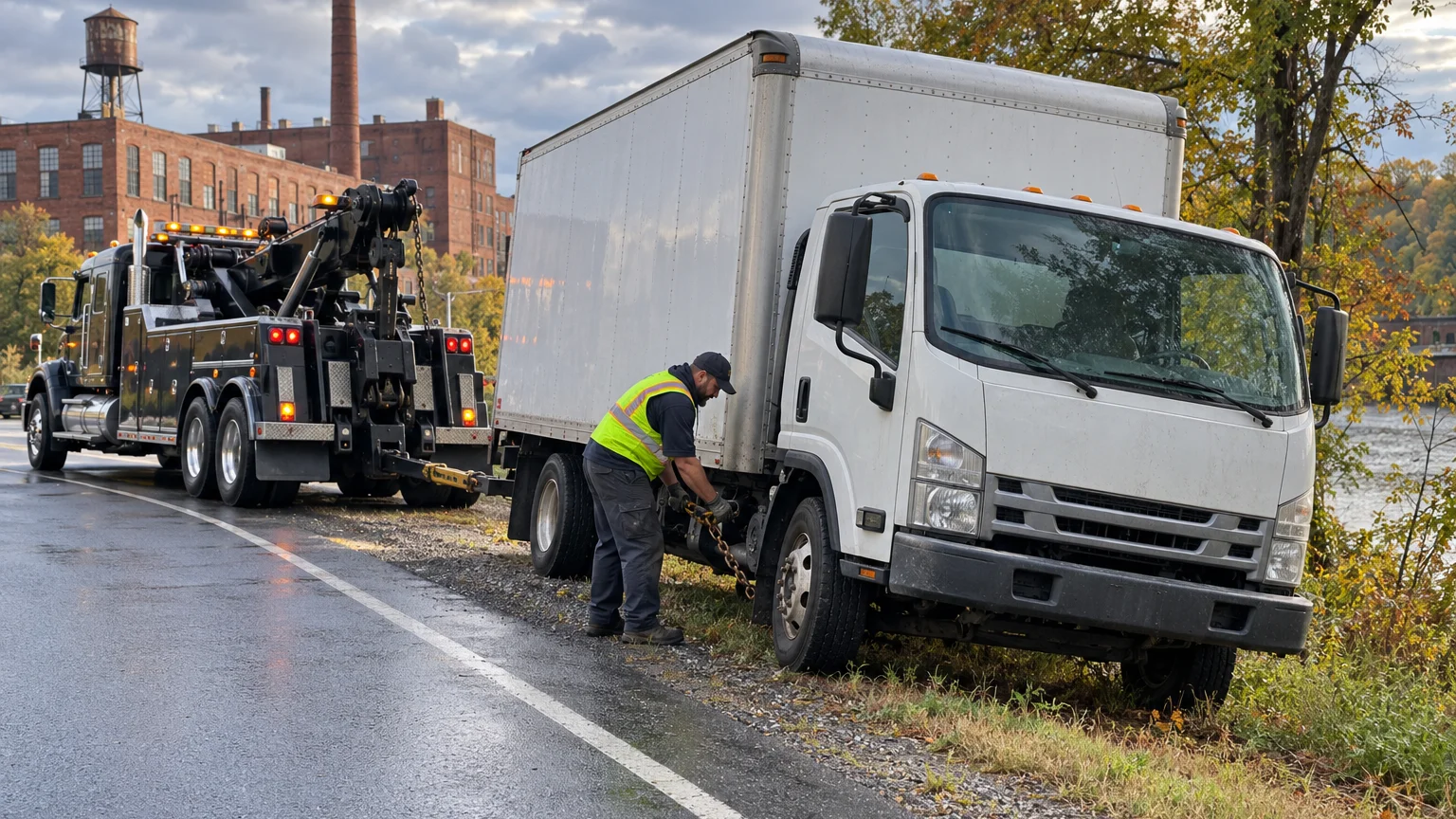
Heavy duty towing Petersburg VA starts with matching the disabled box truck to the right independent operator. Share the truck’s configuration, location, load, condition, and destination before dispatch. Those details help the operator assess the recovery without relying on guesses.
A box truck request differs from a passenger-car tow. The truck may carry cargo, have damaged running gear, or sit where access is limited. Clear information at the start makes the request easier to evaluate.
Identify the truck and its configuration
Start with the truck itself. Give the year, make, model, and unit number if available. Say whether it’s a rental, company vehicle, or privately owned truck. A clear side photo can help when the model name doesn’t tell the full story.
Describe the body rather than calling everything a box truck. Mention whether the cargo body is short or long. Report any liftgate, refrigeration unit, low-mounted step, or equipment attached behind the cab. Don’t assume those features are harmless during loading.
Look for the manufacturer labels inside the driver’s door area. Read the listed information exactly rather than estimating. If the label is missing or unreadable, say that directly. The independent operator can decide what other details are needed.
Also describe the truck’s current shape. A level truck on pavement presents a different request from one leaning into soft ground. Note visible body damage, loose panels, hanging parts, or leaking material. Don’t touch or move anything that appears unsafe.
Quick Tow Richmond is a referral service. We pass the request to an independent licensed operator who owns and controls the towing equipment. The operator decides whether the available equipment fits the truck and scene.
Our heavy-duty towing service page explains how referrals work for larger commercial vehicles. For a broader comparison, read about medium-duty and heavy-duty towing before placing the request.
Share the route and direction of travel
Give the road name, direction of travel, and the nearest clear landmark. “I-95 near Petersburg” leaves too much room for error. Include the direction, nearby exit information, and whether the truck is before or after the landmark.
Petersburg traffic may involve I-95 or I-85. Confirm which route you’re actually on before calling. A navigation pin helps, but it shouldn’t replace a plain description. Pins can land on the opposite carriageway or behind a nearby building.
If you’re in a commercial lot, provide the business entrance or loading-area location. Mention gates, narrow turns, low structures, parked trailers, or blocked access. Don’t promise that a recovery vehicle can fit. Give the facts and let the operator assess them.
Report the truck’s position relative to traffic. Say whether it’s in a travel lane, on a shoulder, in a parking lot, or beyond the pavement. If the scene presents an immediate danger, contact emergency services first.
Drivers can check 511 Virginia for current traffic and incident information. VDOT’s Safety Service Patrol covers Virginia interstates including I-95 and I-85. The patrol provides roadside help and incident management, but it doesn’t perform mechanical repairs or operate as a towing company. Its staff can help a driver arrange a tow.
Our guide to a Petersburg breakdown near I-95 or I-85 covers the passenger-vehicle side of the same corridor. Box-truck requests need more vehicle detail before referral.
Report the load without guessing its weight
Tell the operator whether the cargo box is empty, partly loaded, or loaded. If shipping documents list the cargo weight, read the recorded figure. If they don’t, say the weight isn’t confirmed. An honest unknown is more useful than a confident estimate.
Describe the cargo in plain terms. Note whether it can shift, whether anything has spilled, and whether the box appears damaged. Report any warning labels without interpreting them. The operator may need more information before accepting the work.
Cargo placement also matters. Say whether the load appears even, concentrated toward one end, or visibly shifted. Don’t enter an unstable cargo body to inspect it. Use information already available from the driver, shipper, or paperwork.
If another business controls the load, identify the right contact. That may be the carrier, rental company, fleet manager, shipper, or receiver. Confirm who can approve the tow and who will choose the destination. Quick Tow doesn’t take ownership of the truck or cargo.
Keep pricing questions tied to the actual request. Ask the independent operator for the full total, including mileage, before agreeing. Quick Tow doesn’t set the operator’s total or promise a final price. Commercial towing costs can’t be inferred from Richmond’s passenger-car rules.
Virginia’s statewide private-property towing ceiling applies to nonconsensual passenger-car hookups. It isn’t a quoted price for a driver-requested commercial-truck tow. The broader Virginia towing statutes explain the state rules for towing, storage, and trespassing vehicles.
Describe whether the truck rolls and steers
Explain what happened before the truck stopped. Report whether the engine quit, the transmission stopped engaging, a tire failed, or a collision caused visible damage. Don’t diagnose the cause unless a qualified person has confirmed it.
Next, describe what the truck can still do. Can it roll freely? Does the steering move normally? Is the parking brake released? Are any wheels locked, missing, turned sharply, or visibly damaged? Say when you don’t know.
Mention fluid beneath the truck, smoke, unusual heat, or damaged electrical components. Don’t identify a fluid by color alone. Keep people away from an active hazard and follow directions from emergency personnel at a controlled scene.
Photos can help the operator understand wheel position and ground conditions. Take them only from a safe place. Useful views include the truck’s front, rear, both sides, wheel areas, and the space around it. Avoid standing in a traffic lane for a better angle.
Don’t try to drag or push a box truck to test whether it rolls. That can change the scene and create more damage. Give the operator the current condition and wait for instructions.
A similar issue can arise farther north on the same corridor. Our guide to a box-truck breakdown on I-95 near Chester explains how location and vehicle condition shape that request.
Confirm the destination and recovery plan
Choose a destination before dispatch when possible. It may be a repair facility, fleet yard, rental location, secure property, or another site approved by the vehicle owner. Confirm that the destination will accept the truck.
Ask about access at both ends. A destination may have gates, limited turning space, or receiving instructions. Share the entrance, contact name, and any access directions already provided by the property. Don’t assume someone will be present.
Confirm who can authorize the tow. The driver may not control a rented truck, leased vehicle, or company unit. A fleet manager or rental provider may need to approve the destination and payment before the operator moves it.
The recovery plan comes from the independent operator. Describe the truck and scene, then let that operator determine the appropriate equipment and method. Quick Tow doesn’t own recovery vehicles or direct the technical work.
If the truck is disabled during an active roadside incident, our emergency towing service page explains how to leave details through the recorded line. The line takes calls around the clock. A recording notice plays before the message is recorded and transcribed. No live dispatcher answers, and no callback time is promised.
Before agreeing, confirm the destination, payment responsibility, mileage, and full quoted total directly with the operator. Keep the operator’s contact details and any provided paperwork. That creates a clearer handoff for the driver, fleet manager, and receiving location.
Frequently asked questions
Can Quick Tow Richmond tow the box truck?
Quick Tow Richmond doesn’t perform towing or own recovery equipment. We refer requests to independent licensed towing operators. The operator evaluates the truck, scene, destination, and available equipment before accepting the work.
What information should I have ready?
Have the truck’s year, make, model, location, direction of travel, load status, rolling condition, and destination. Share confirmed information from labels or shipping records. Don’t estimate missing weights or promise that the truck can roll.
Does VDOT Safety Service Patrol tow commercial trucks?
VDOT Safety Service Patrol isn’t a towing company and doesn’t perform mechanical repairs. It provides free roadside assistance and incident management on covered Virginia interstates. It can help a stranded driver arrange a tow.
Can I get an arrival-time promise?
No arrival window is promised through Quick Tow Richmond. Timing depends on the independent operator and the specific request. Confirm any scheduling information directly with the operator handling the referral.
When to call us
Call when a disabled box truck in Petersburg needs evaluation by a licensed towing professional. Leave the truck details, exact location, load status, rolling condition, and confirmed destination on our recorded line. Call us at (804) 701-6752.