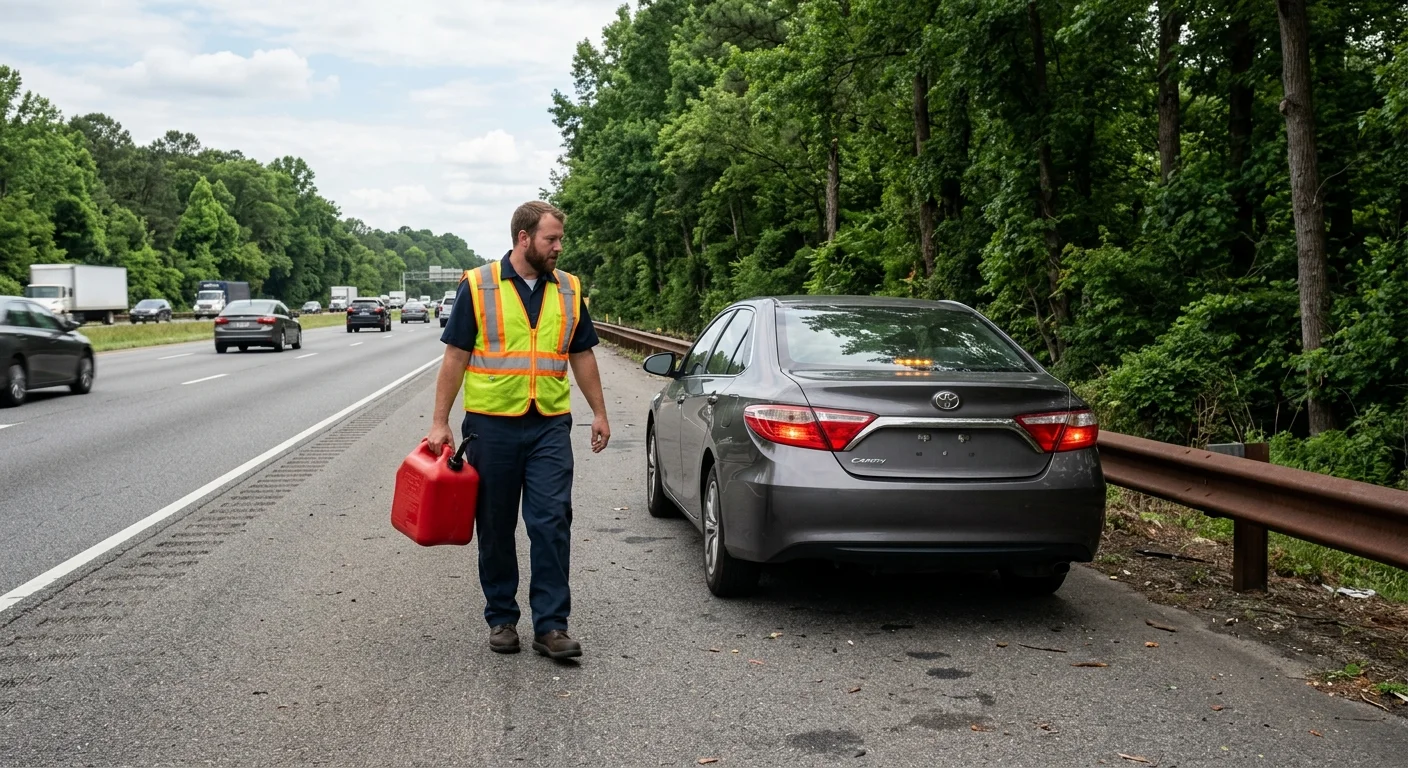
Quick fuel delivery is the right first move when your car simply ran out of gas. Choose a tow when the wrong fuel went into the tank, or the engine still won’t start after refueling. The difference comes down to whether fuel alone can get you moving again.
When fuel solves it and when the car needs a tow
Fuel delivery fits a straightforward situation. The gauge reached empty, the engine stopped, and nothing else seemed wrong beforehand. An operator can bring enough fuel to help you reach a nearby station.
The decision changes when there’s another problem. If diesel went into a gasoline car, or gasoline went into a diesel vehicle, tell the operator before anyone attempts another start. Ask for a tow to a repair shop that can inspect the car.
The same approach applies when the engine won’t restart after fuel arrives. Running out may not be the only issue. A weak battery, a fuel-system problem, or another fault could be involved. The exact cause can’t be confirmed from the roadside without a proper diagnosis.
Don’t keep guessing or repeatedly trying the ignition. Explain what happened and what the car does now. The operator can then decide whether roadside help remains practical.
A tow also makes sense when the car is stopped somewhere unsafe for roadside work. That can include a narrow shoulder, an active travel lane, or a location with poor visibility. Our emergency towing referral service can match you with an independent operator when fuel delivery isn’t enough. That operator performs the work and bills you directly.
What a quick fuel delivery call includes
A quick fuel delivery call brings a limited amount of the correct fuel. Its purpose is to help you reach a station, not fill the tank. The delivered amount, fuel charge, and service total depend on the independent operator handling the call.
Ask for the full expected total before agreeing. Confirm whether the quote includes the fuel, roadside service, and any travel or mileage charge. Quick Tow Richmond doesn’t set the operator’s final price.
Our roadside assistance service is the right starting point when the car otherwise appears ready to drive. Tell us whether the vehicle uses regular gasoline, premium gasoline, or diesel. If you aren’t certain, say so. Check the fuel-door label or owner’s manual if you can do that safely.
The line takes calls around the clock by a recorded system. A recording notice plays before your message is captured and transcribed. Include a callback number and clear location details. An independent operator can then review the request.
No arrival time can be confirmed before an operator accepts the job and checks current conditions. Traffic, access, location, and operator availability can all affect the call. If your position becomes dangerous, contact emergency services instead of waiting beside traffic.
Where drivers run out around Richmond
An empty tank can leave you on I-95, I-64, Chippenham Parkway, or the Powhite Parkway. Each location needs a different description. “Near Richmond” isn’t enough for an operator trying to find the correct shoulder or ramp.
The I-95 and I-64 overlap through Richmond deserves extra care. A VDOT-authored study calls that corridor “one of the highest crash, heavily congested corridors in the region.” It runs from the Bryan Park interchange toward the James River. Our I-95 breakdown guide explains how to report your position clearly.
VDOT’s Safety Service Patrol covers I-95, I-64, and I-295 in the Richmond area. Its free roadside services include fuel delivery, tire changes, and jump starts. The patrol manages incidents and helps move disabled vehicles away from danger. It doesn’t replace a towing company or perform mechanical repairs.
Check 511 Virginia for current traffic and incident information. That can help you identify nearby exits, closures, or delays before requesting help.
On Chippenham, include the nearest exit and travel direction. Do the same on the Powhite. If you’re near an interchange, say which road you entered from. Precise details prevent confusion between opposite shoulders and nearby ramps.
Stay safe on an interstate shoulder
Move as far from the travel lane as the car can safely go. Turn on the hazard flashers. Turn the front wheels away from moving traffic and set the parking brake.
If the vehicle is stable and remaining inside is safer, stay belted. Don’t stand between the car and passing traffic. Avoid walking along the shoulder to search for a station. A short distance can still expose you to fast-moving vehicles and limited sight lines.
Hazard lights help other drivers recognize that your vehicle is disabled, but they don’t remove the risk.
Keep your location description ready while you wait. Watch for a clear operator identification before unlocking the door or stepping outside. If the operator calls, confirm the vehicle color and your exact position.
Conditions can change quickly. Smoke, fire, rising water, a vehicle partly in a travel lane, or an immediate collision risk calls for emergency help. Leave the vehicle only when doing so is safer than staying inside. If you must exit, move away from traffic without crossing active lanes.
What to have ready when you call
Start with the road name and direction of travel. “I-95 southbound” is far more useful than “on the interstate.” Add the nearest mile marker, exit number, interchange, or visible landmark.
Next, describe the stopping point. Say whether you’re on the right shoulder, left shoulder, entrance ramp, exit ramp, parking lot, or garage level. Mention anything that makes access difficult, including a gate or narrow garage entrance.
Provide these details in your recorded message:
- Your name and callback number
- Road, direction, exit, or mile marker
- Vehicle color, make, and model
- Gasoline or diesel
- Whether any incorrect fuel was added
- Whether the engine stopped while driving
- Whether the car restarted after fuel was added
- Whether the vehicle blocks a lane
Don’t guess about fuel type. If you can’t confirm it safely, tell us that. The operator may ask you to check the fuel door, dashboard information, or owner’s manual.
Also say whether you want roadside fuel or expect a tow. That choice can change after the operator reviews the situation. If cost is your main concern, our guide to lower-cost roadside assistance in Richmond explains what to confirm before accepting service.
Fuel delivery questions
What if the car still won’t start after refueling?
Fuel delivery has done all it can once the correct fuel is in the tank and the engine still won’t start. That result doesn’t confirm which part failed. It only shows that adding fuel didn’t solve the no-start.
Tell the operator what happens when you turn the key or press the start button. Mention whether the dashboard lights come on and whether you hear the engine trying to start. Don’t present your guess as a diagnosis.
The next practical step is usually a tow to a repair destination. The independent operator can discuss the vehicle, pickup point, and destination before you agree. Ask for the complete towing total, including mileage.
What if I’m in a parking garage?
Give the garage name or street location, then identify the level and nearest entrance. Say whether you entered from a different street than the garage’s listed address. Include any posted clearance information you can read without leaving the car in an unsafe spot.
Tell us that the vehicle is inside a garage before an operator accepts the request. Garage access can affect which operator can take the job. Don’t assume a vehicle that needs towing can be moved from every level through every entrance.
If the car only needs fuel, keep it parked and avoid blocking the driving aisle. If it still won’t start after refueling, the operator will need the garage details before discussing a tow.
When to call us
Call when fuel alone may get you moving, or when a no-start requires a licensed towing operator. Quick Tow Richmond will record your request and match you with an independent local operator who performs the work and bills you directly. Call us at (804) 701-6752.