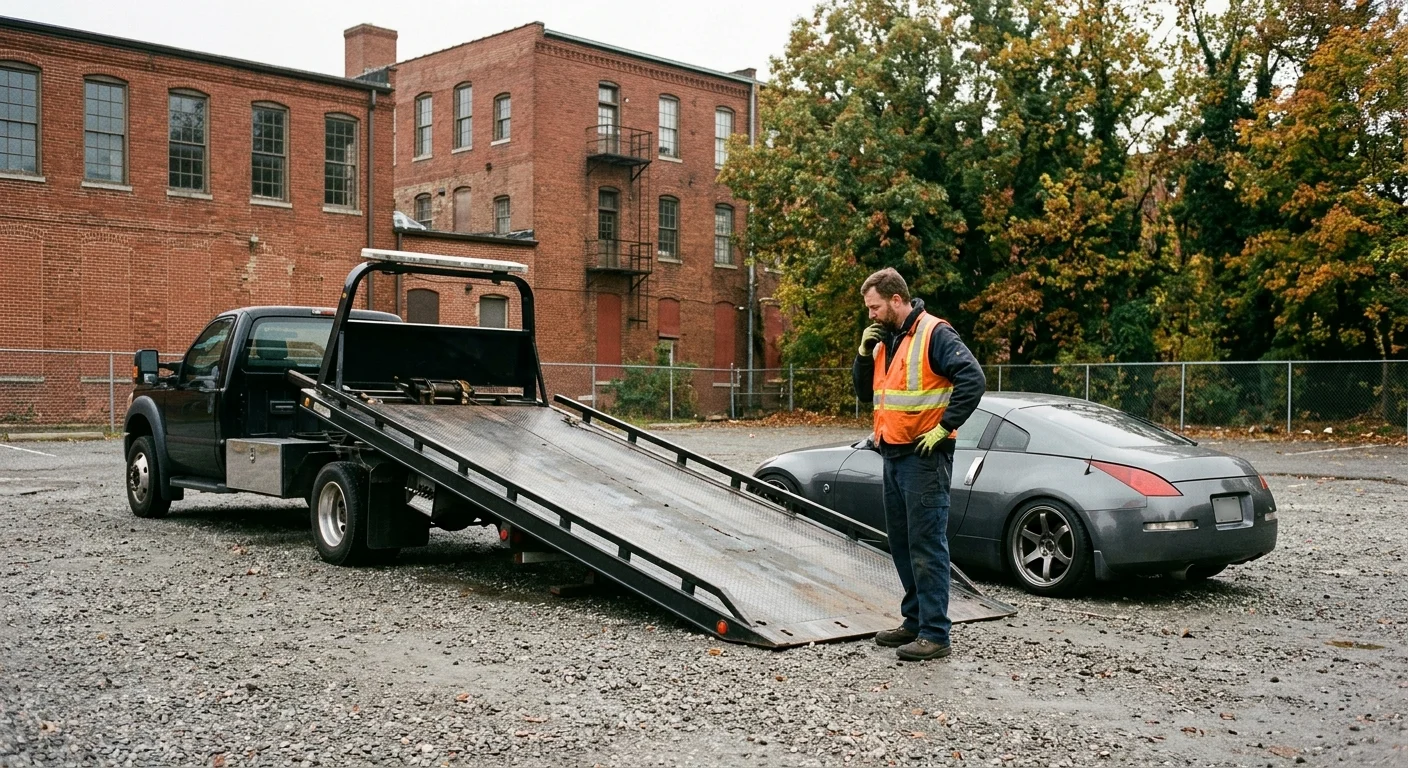
The answer to how to tow a lowered car starts before loading. Share its clearance concerns, condition, access photos, and manual instructions with the operator. No truck type removes every scraping risk, so the operator needs the full picture before choosing a plan.
How to tow a lowered car: start with clearance details
A lowered car needs a more detailed description than its year and model. Tell the operator whether the suspension, bumpers, side skirts, exhaust, or bodywork have been modified. Mention any front lip, splitter, or other part sitting unusually close to the pavement.
Give a measured clearance figure only when you already know it’s accurate. If you don’t know, say that plainly. Photos can show the operator where the car sits closest to the ground without turning a guess into a measurement.
The vehicle’s current condition matters too. Explain whether it starts, rolls, steers, and shifts as expected. Report locked wheels, steering trouble, collision damage, loose bodywork, or missing keys. If the car has adjustable suspension, state its current position. Don’t change that setting unless the owner’s manual or operator directs you.
Location details help distinguish one Richmond pickup from another. A curbside car in the Fan presents different access than a driveway in Henrico or a parking lot in Chesterfield. For a breakdown near the downtown I-95/I-64 overlap, provide the route, direction, nearest exit, and visible landmark. 511 Virginia can help you confirm current traffic and incident information.
Share these details when requesting exotic and classic vehicle towing. Quick Tow Richmond refers the request to an independent licensed operator. The operator can then evaluate the car’s condition and pickup setting before selecting equipment.
Show both ends of the trip
One photo of the front bumper won’t explain the whole job. Photograph the complete car from several corners. Then capture the lowest visible areas near the front, sides, center, and rear. Include the wheels and any damaged or loose parts.
Take those photos only from somewhere outside moving traffic. You don’t need to crawl under the vehicle. The goal is to show what’s visible and flag anything the operator should inspect in person.
Next, photograph the path around the car. Show the curb, driveway, garage entrance, gate, parked vehicles, walls, posts, and available working space. If the car is inside a parking structure, include the entrance and any posted restrictions. Photograph the route from the parking space toward the exit.
Repeat that process at the destination. A repair shop’s open lot differs from a narrow residential driveway. Show the entrance, surface, slope, turns, and intended unloading area. If you haven’t visited the destination, ask the shop or property owner for current photos.
This step matters in the Fan, where parking is limited and nearby vehicles may reduce available space. It also matters when moving a car between Richmond and a suburban destination. The operator needs to consider both locations, not just the disabled car.
Send original photos when possible. Cropped images can hide the pavement, nearby obstacles, or the lowest part of the body. Add a short note explaining what each image shows and when it was taken.
Use the manual as the model-specific source
The owner’s manual should guide model-specific towing preparation. Look for sections labeled towing, transport, roadside assistance, recovery, or disabled vehicle. The wording varies by manufacturer, so search the digital manual if the printed index isn’t clear.
Read the complete section instead of relying on a search-result excerpt. Instructions may depend on the vehicle’s drivetrain, current condition, or available operating modes. If the manual describes a preparation step, send that page to the operator. A screenshot with the model and section heading visible gives useful context.
Don’t guess when the manual is unclear or unavailable. Tell the operator that you couldn’t confirm the manufacturer’s guidance. The operator can assess the car on scene and decide whether more information is needed before loading begins.
Modified cars need another layer of context. Note any change that could affect clearance or normal vehicle operation. If a shop installed the suspension or body parts, keep its documentation available. Don’t remove parts or change settings based only on general online advice.
Owners moving an older or collectible vehicle can also review our guide to classic car towing in Richmond. It covers related planning questions without replacing the instructions written for a specific vehicle.
Keep the manual, keys, wheel-lock key, and modification records together. Having them ready lets the operator inspect the car and compare its actual condition with the available guidance.
Give the operator the final call on loading
The operator should choose the loading method after reviewing the vehicle and both locations. A request for a certain truck type isn’t a complete loading plan. The car’s condition, clearance points, surrounding space, and manufacturer guidance all need consideration.
You can still ask direct questions. Ask which areas the operator wants to inspect first. Point out known modifications and existing damage. Confirm that the photos and manual pages reached the person handling the tow.
Our guide to wheel-lift or flatbed towing explains the basic service choice. Use it to understand the conversation, not to prescribe a method before the operator sees the car. Neither equipment label is a promise against contact or damage.
When the operator arrives, walk around the vehicle together before loading starts. Identify the lowest visible parts and any pieces that feel loose. Confirm the intended destination and show the operator the access photos from that location.
Take clear pictures of the car’s existing condition before handing over the keys. Keep yourself away from the working area once the operator begins. If the operator finds something that changes the plan, let that assessment happen before the vehicle moves.
Pressure creates poor decisions. A waiting repair appointment or crowded Richmond curb doesn’t change the car’s clearance. Give the operator room to stop, inspect, and explain a revised approach when the original plan no longer fits the actual conditions.
Verify the setup before dispatch
Before accepting the tow, make sure the matched operator has the correct information. Repeat the year, make, model, modification details, vehicle condition, pickup address, and destination. Ask whether the operator reviewed the photos and manual guidance.
Useful questions include:
- What truck and equipment do you plan to bring?
- Have you accounted for the car’s lowest visible areas?
- Do you need more photos of either location?
- Does the vehicle’s current condition change the plan?
- What’s the full quoted total, including mileage and loading-related additions?
A flatbed towing request should still include the car’s clearance and access details. The word “flatbed” alone doesn’t describe the approach, available space, or condition of the vehicle. Ask the operator to explain how the planned setup fits the specific pickup.
Quick Tow Richmond doesn’t perform the tow or set the operator’s final price. The independent operator contracts with you and bills you directly. Ask for the complete total with mileage included before agreeing to service. If the vehicle details or destination change, request an updated total.
Equipment can also change between the first conversation and dispatch. When that happens, confirm the replacement plan with the assigned operator. Don’t assume that another truck or attachment will handle the car in the same way.
Save the operator’s instructions, quote details, and destination information together. Keep your phone available, but don’t rely on an unconfirmed arrival time. Accurate vehicle and access details give everyone a clearer basis for the tow.
When to call us
A lowered or modified car needs a licensed towing pro when clearance is uncertain, a wheel won’t roll, or either location limits access. Quick Tow Richmond records your message after playing a recording notice, then refers the request to an independent operator. Call us at (804) 701-6752.