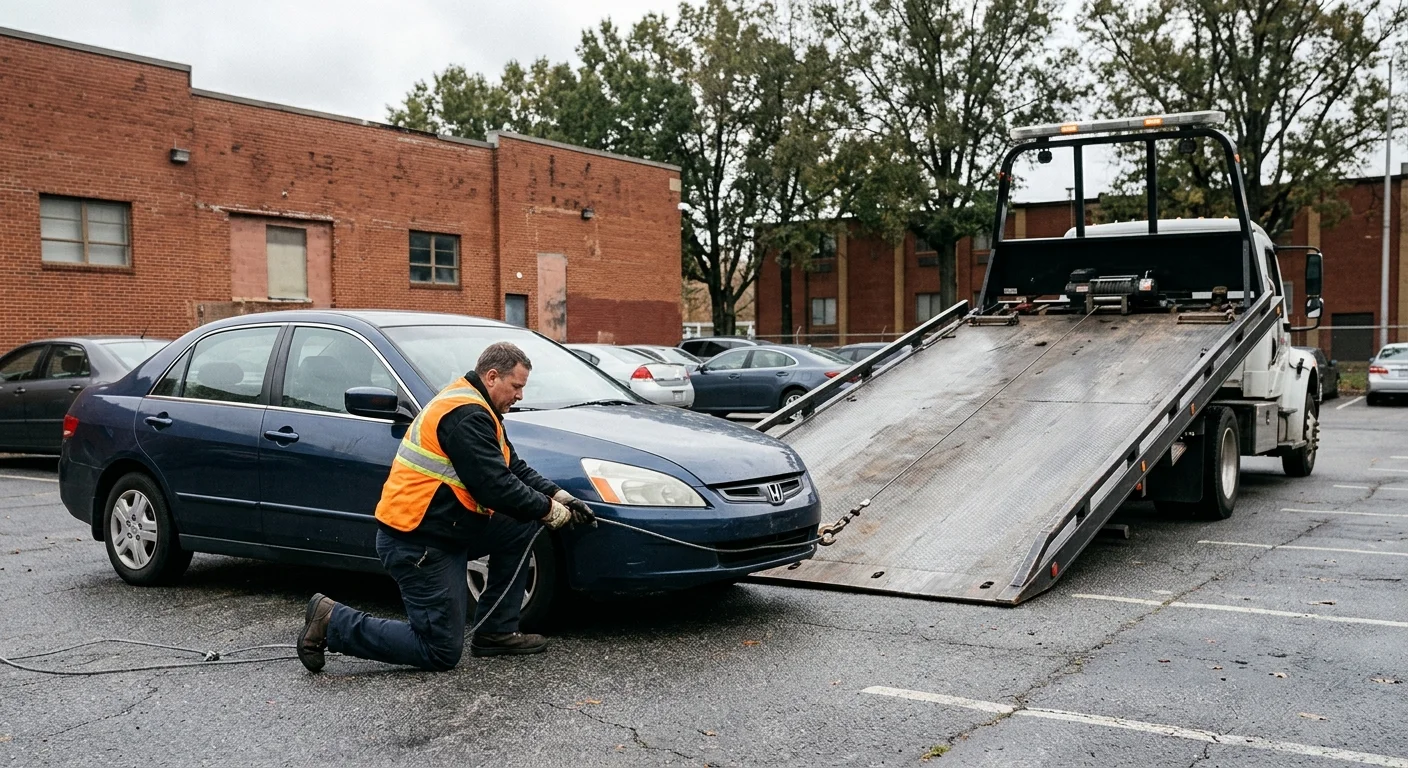
The short answer to “can you tow a car without keys” is yes. A flatbed operator can often load the car with a winch without starting it or turning the ignition. The exact method depends on which wheels can roll, the drivetrain, the parking brake, and where the car sits.
Keys still make some jobs simpler. They may let the operator release the steering lock, shift into neutral, or select a vehicle-specific transport setting. If the keys are lost, locked inside, or attached to a dead key fob, say that before an operator is dispatched.
Can you tow a car without keys using a flatbed?
A flatbed tow is often considered when the engine can’t start or the car can’t be driven. The operator positions the truck, attaches the winch equipment, and pulls the vehicle onto the tilted deck. Starting the engine isn’t required for that basic loading method.
That doesn’t mean every car loads the same way. A wheel may be turned toward a curb. The transmission may remain in park. An electronic parking brake may stay applied. The car may also sit inside a garage, behind a gate, or against a parking stop.
Those details affect how the operator approaches the vehicle. Extra positioning equipment may be needed when a wheel won’t roll freely. The operator may also need a different path to reach an approved attachment point. Don’t try to release a component by force before help arrives.
Tell the referral line exactly what the car is doing. “It won’t start” isn’t enough by itself. Explain whether the doors open, whether any dashboard lights appear, and whether the wheels seem locked.
The vehicle’s year, make, model, and drivetrain also matter. Share them before dispatch whenever possible. The independent operator can then choose a method based on the vehicle and its manufacturer guidance.
Wheel-lift and dollies when the steering is locked
Wheel-lift towing raises one end of the vehicle while another pair of wheels remains near the road. That arrangement makes wheel position and drivetrain information especially important.
A locked steering column can prevent the front wheels from being straightened. That may change which end can be lifted or whether the operator considers dollies. Dollies support wheels that shouldn’t remain rolling on the pavement during the move.
The correct setup isn’t determined by the missing key alone. The operator must consider which wheels drive the car, which wheels are locked, and whether the vehicle has visible damage. A tight parking position can also limit access around the tires.
Before calling, look at the front wheels from a safe position. Note whether they point straight or toward one side. Don’t crawl beneath the vehicle or stand between it and traffic. If the car is on the I-95/I-64 downtown overlap, give the operator your direction of travel and the nearest visible exit or marker.
A wheel-lift can be suitable for some keyless situations. A flatbed may fit others. This wheel-lift and flatbed comparison explains the basic distinction. The dispatched operator makes the final equipment choice after reviewing the vehicle and its location.
Electronic parking brakes, AWD, and EV tow modes
Three details can complicate a keyless tow: an electronic parking brake, an all-wheel-drive system, or an electric vehicle that remains in park. None automatically makes towing impossible. Each one changes the information the operator needs.
An electronic parking brake may not release when the battery is dead. Don’t assume that connecting power or pressing a control will solve it. Vehicle procedures vary. Tell the operator what the dashboard shows and whether you hear or feel the brake responding.
AWD vehicles also deserve a clear drivetrain description. If you aren’t sure what the car has, send the exact year, make, model, and trim. Don’t guess based on a badge that may be missing or hard to read. The operator can check the proper towing procedure before moving it.
EVs may have a transport setting, tow setting, or manufacturer procedure for loading. The names and steps aren’t universal. Our guide to Tesla Transport Mode and Tow Mode explains why those terms shouldn’t be treated as interchangeable.
If the screen won’t turn on, report that directly. Also say whether the charging cable is connected and whether the car appears damaged. Don’t pull a connected cable, open sealed electrical areas, or force the vehicle out of park.
For any vehicle, the owner’s manual remains the model-specific source. The tow operator should use the applicable instructions and conditions found on scene.
What the operator will ask before dispatch
Good information helps the referral line match you with an appropriate independent operator. Start with the exact vehicle location. Richmond has several roads sharing the same route numbers, and “near downtown” leaves too much room for error.
If you’re along I-95, I-64, or I-295, report the travel direction and nearest exit. For a parking lot in Shockoe Bottom or The Fan, give the business, block, garage level, or entrance that reaches the car. Mention gates, height limits, tight turns, and parked vehicles blocking access.
Next, describe the vehicle and its condition:
- Year, make, model, and trim
- Front-wheel drive, rear-wheel drive, AWD, or unknown
- Whether the key or key fob is available
- Whether the doors open
- Whether the steering wheel or road wheels are locked
- Whether the transmission can shift
- Whether the parking brake releases
- Whether the battery appears dead
- Whether the vehicle has collision or wheel damage
- Where you want the vehicle taken
Don’t leave out a low garage ceiling or a car facing a wall. That information can matter as much as the missing keys. Our Richmond towing call checklist gives you a simple way to organize the details.
The independent operator contracts with you and bills you directly. Before agreeing, ask for the full expected total, including mileage and any equipment-related charges.
Why proof of ownership may still matter
Moving a car without keys can create an obvious authorization concern. The specific documents requested for a voluntary tow depend on the operator and the circumstances. Ask what proof will be accepted before the truck is sent.
Virginia law addresses proof of ownership in a related situation. Under Va. Code § 46.2-118(B)(19), a towing operator may not refuse an owner access to personal items after proof of ownership. The operator also may not require the owner to retrieve the whole vehicle or pay a fee just to recover those items.
That rule doesn’t create one universal document checklist for every requested tow. It does show why ownership verification matters when a vehicle, its contents, or a storage lot is involved. Bring the documents you have and ask the operator what else is needed.
If your car disappeared from a Richmond street or parking space, don’t order another tow immediately. Check the city’s official Towed Vehicles listing first. Richmond says the listing includes vehicle details, partial VIN or plate information, towing time, and the lot address. Entries remain available for 14 days.
A private breakdown tow and a city-directed removal are different situations. Confirm where the vehicle is before arranging transportation.
FAQ about towing without keys
Can the car be moved if the doors are locked?
Sometimes. A flatbed operator may be able to load a vehicle without entering the cabin. The answer depends on access, wheel position, the parking brake, and the approved attachment method.
Tell the operator that every door is locked. Don’t break a window or force a lock just to prepare for towing. If essential documents are inside, ask what the operator needs before dispatch.
What if the key fob is lost?
Report the missing fob and describe the car’s current state. Say whether it starts, shifts, steers, or displays any messages. A lost fob may affect access to neutral or a transport setting, but it doesn’t automatically prevent a tow.
Give the exact vehicle details. The operator can compare them with the applicable loading instructions and choose the equipment.
What if the battery is dead and the parking brake is applied?
Don’t force the parking-brake control or drag the car yourself. Tell the operator that the battery appears dead and the brake remains applied. Also mention any dashboard response, unusual noises, collision damage, or blocked wheels.
The operator may need to plan around wheels that won’t roll. That can influence whether a flatbed, wheel-lift, dollies, or other positioning equipment is considered. The final method should follow the vehicle’s requirements and the conditions on scene.
When to call us
Call when missing keys, locked steering, an electronic parking brake, AWD, or an EV tow setting requires a licensed towing pro. Quick Tow Richmond matches drivers with independent licensed operators, and the operator performs the tow and bills you directly. Call us at (804) 701-6752.